
























The U.S. line has undergone major changes. Imports from the Port of Los Angeles surged by 21%, and cargo volume in the East United States continues to decline.
Sunny Worldwide LogisticsIt is a logistics company with more than 20 years of transportation experience, focusing on markets such as Europe, the United States, Canada, Australia, and Southeast Asia. It is more of a cargo owner than a cargo owner~

The latest port data shows that container import volumes on the West Coast and East Coast of the United States are showing clear differentiation. The Port of Los Angeles imported heavy containers in April, a significant increase of 21% from March, while imports from East Coast and Gulf of Mexico ports experienced double-digit declines. This trend is driving shipping companies to adjust their route networks, and freight forwarding companies engaged in US line business need to adjust their quotations and booking strategies accordingly.
Port of Los Angeles imports performed strongly in April, hitting the second-highest level in the same period in history
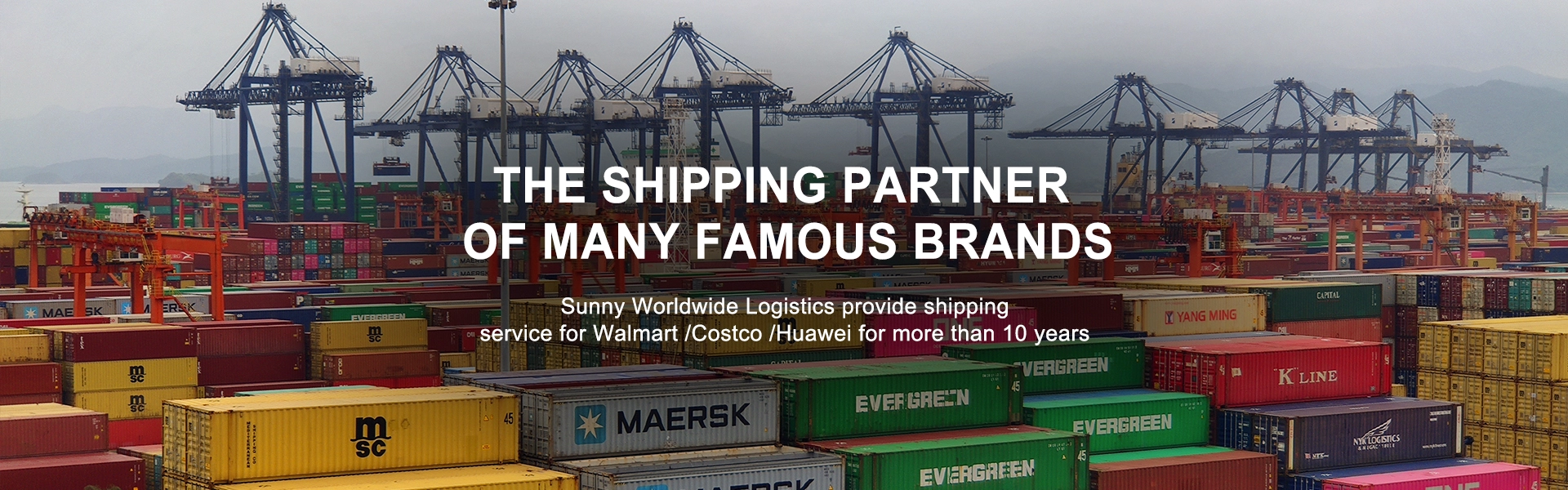
Data released by the Los Angeles Port Authority shows that the port’s container throughput reached 890,861TEU in April 2026, a year-on-year increase of 5.7%, making it the second-highest April in history. Among them, the handling volume of imported heavy containers was 459,825TEU, a year-on-year increase of 5%, and a month-on-month increase of 21%. Gene Seroka, executive director of the Port of Los Angeles, said April was the strongest month this year and the highest volume since August last year, reflecting the resilience of demand from American consumers. He also pointed out that judging from the booking trends in Asia, the next wave of imports of back-to-school and early Christmas goods has begun to take shape.
The divergence in cargo volume trends between the Western United States and the Eastern United States has intensified
In contrast to ports in the West Coast, import volumes at ports on the East Coast and Gulf of Mexico have declined significantly. According to the global shipping report released by Descartes Systems Group, the total volume of U.S. container imports in April 2026 was 2.28 million TEU, a year-on-year decrease of 5.5% and a month-on-month decrease of 3.2%. In terms of regions, the share of ports on the West Coast rebounded, with the Port of Los Angeles increasing by 19.5% month-on-month and the Port of Long Beach increasing by 13.1%; while the import volume of ports on the East Coast and the Gulf of Mexico fell by 18% to 18.2% year-on-year.
Analysts believe that this differentiation is mainly driven by trade policy uncertainty and route safety factors. The East Coast route has traditionally relied on the Suez Canal, but continued instability in the Red Sea and Strait of Hormuz has led a large number of shipping companies to choose to bypass the Cape of Good Hope, lengthening voyages and increasing costs. In contrast, the direct flights from the US to the West via the Pacific are less affected by the situation in the Middle East and have become an alternative channel for importers to avoid risks.
Shipping companies adjust trans-Pacific route layout, Qingdao Port’s role differentiates
Changes in cargo flow are forcing shipping companies to reorganize their route networks. Mediterranean Shipping Company (MSC) has recently made systematic adjustments to its three routes from Asia to the East United States (Empire, Amberjack, and Emerald). Among them, the Empire route moved out of Qingdao Port, added Norfolk and Everglades ports, and added a call at Rodman Port in Panama on the return leg; the Amberjack route set Qingdao as the first port of call in Asia and removed Yantian and Xiamen. Qingdao Port has a completely different status in the two routes of the same shipping company - one has been removed and the other is listed as the first port. For exporters from northern China, if the destination is the eastern United States, it becomes more critical to select a specific voyage, and the importance of locking the route code when quoting is significantly increased.
Practical tips for freight forwarders
First, shipping space in the US-Western region may become increasingly tight in a phased manner. If importers continue to transfer goods from the east coast to the west coast, the handling volume of ports such as Los Angeles and Long Beach will further increase. Although the port currently states that operations are running smoothly and there are no obvious backlogs or delays, if peak season demand superimposes the transfer of cargo volume, the risk of congestion at West Coast ports cannot be ignored. It is recommended to lock shipping space for customers in advance, especially during the back-to-school season and the shipping window for Christmas goods.
Second, trans-Pacific route quotations need to leave room for “transfer premium”. Shipping companies are gaining more pricing power on the trans-Pacific route as more cargo is diverted to the West Coast. When quoting, you can proactively explain to customers that the volume of cargo moving from the East Coast to the West Coast is increasing and that space in the US and West is becoming tight.
Third, for customers who insist on traveling to the east coast, the cost of detouring needs to be clearly calculated. At present, a large number of shipping companies are detouring around the Cape of Good Hope. The voyage length of the US East Route has been lengthened, fuel costs have soared, and war risk surcharges have also remained high. If the customer still chooses the US-Eastern route, it is recommended that cost items such as detour surcharges and war insurance be separately listed in the quotation so that the customer can weigh the balance between timeliness and cost.
The pace of shipping companies adjusting routes is accelerating. In the past month, MSC has continuously adjusted its two major route networks from Asia to the West and East of the United States, and its trans-Pacific layout is being rapidly reorganized. The quotation and booking strategies of US line freight forwarders need to closely follow this adjustment trend.