
































The West, West and East hit new lows, why did the European line rise against the trend?
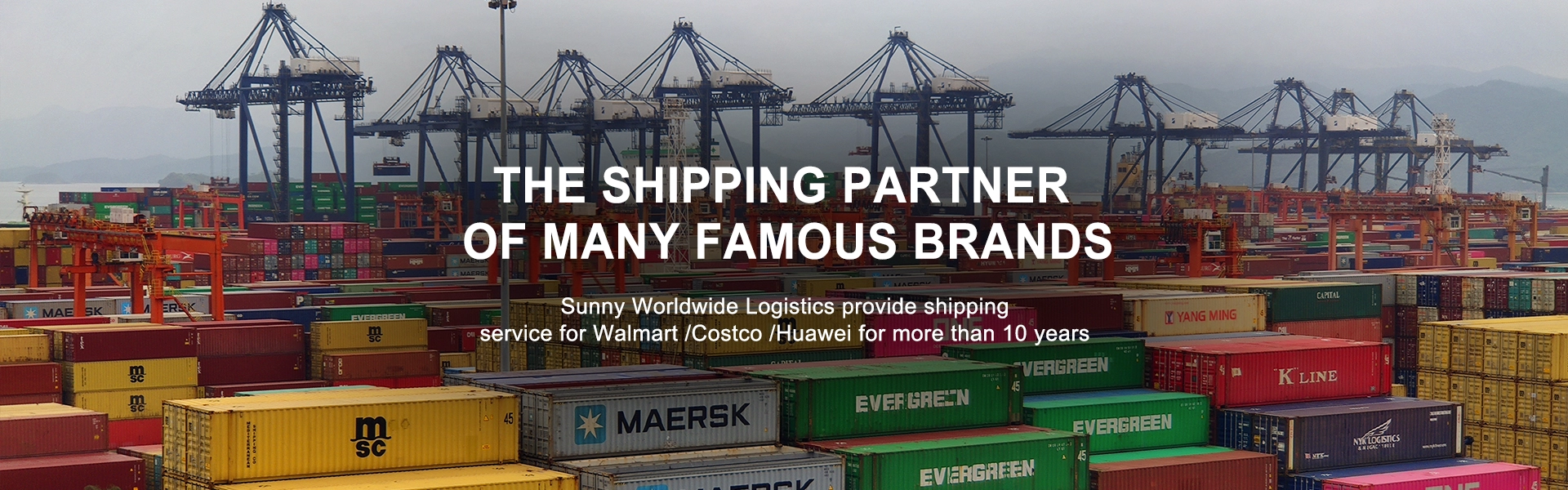
Sunny Worldwide Logistics It is a logistics company with more than 20 years of transportation experience, focusing on markets such as Europe, the United States, Canada, Australia, and Southeast Asia. It is more of a cargo owner than a cargo owner~

The global container shipping market trend is further differentiated. The latest Shanghai export container freight index announced on November 20 was at 3503.78 points, down 68.55 points from the previous period, with a weekly decrease of 1.92%, falling for the third consecutive week.
The decline in the US West and US East routes expanded, while European and Mediterranean routes diverged. Many shipping companies planned to increase FAK rates or impose peak season surcharges starting in December. At the end of the year, the container shipping market is showing different trends: "U.S. lines are under pressure, while European lines are holding up prices."
The decline in the US line expanded, and the US East line dropped by $611 in a single week
Looking at different routes, the freight rate from the Far East to the US West was reported at US$6,711/FEU, down US$400 from the previous issue, with a weekly decrease of 5.62%; from the Far East to the US East, the freight rate was reported at US$8,776/FEU, down by US$611, with a weekly decrease of 6.51%. The declines of both routes were larger than before, and the American route became the main factor dragging down the composite index.
The performance of the near-ocean route was relatively stable: the Far East to Southeast Asia increased slightly by US$2, Japan's Kansai and Kanto routes remained unchanged, and the South Korean route fell by US$6 per TEU.
Freight rates from Shanghai to Los Angeles and New York hit record lows
The world container freight index released by Drewry on November 19 fell by 3% to US$4,176/FEU. The trans-Pacific route has fallen for seven consecutive weeks: Shanghai to New York fell 9% to $8,194/FEU, the lowest in 15 weeks; Shanghai to Los Angeles fell 5% to $7,026/FEU, the lowest in 12 weeks.
Shipping companies are controlling capacity through empty sailings. The trans-Pacific route has announced the cancellation of 4 sailings this week, and this number is expected to increase to 10 next week. The number of empty flights has increased significantly. However, Drewry still expects that U.S. line freight rates will continue to fall next week, and supply adjustments have not yet reversed the pattern of weak demand.
The actual transaction price and ratio structure of the American line deserve attention
Judging from the freight forwarding market quotations, the US-Western ratio of some alliance shipping companies has dropped to about US$6,000/FEU, and the market FAK quotation is still around US$7,000 to 7,300. The US-Western ratio generally adopts a 1:1 FAK to long-term contract ratio.
In the eastern United States, FAK quoted a price of approximately US$9,000. After a 1:1 or 1:2 ratio, the actual transaction price was approximately US$7,700. Industry insiders pointed out that the current transportation costs per FEU in the US West are about US$1,700 to US$1,800 and in the US East are about US$2,800. Compared with the existing market freight rates, there is still a lot of room for improvement.
As the U.S. year-end holiday approaches, some cargo owners are worried that their goods will arrive in Hong Kong during the holiday. Shipping arrangements have become more cautious, and short-term demand is still under pressure.
Europe-European lines are divided, shipping companies are focusing on price increases in December
Unlike the U.S. lines, which continued to decline, European and Mediterranean routes performed relatively strongly. SCFI data shows that the freight rate from the Far East to Europe fell by 1.65% to US$2,253/TEU; the freight rate from the Far East to the Mediterranean rose by 1.63% to US$3,678/TEU. Drewry data also showed that Shanghai to Genoa rose 6% to US$4,436/FEU, while Shanghai to Rotterdam remained at US$3,496/FEU. In terms of capacity, 4 sailings on routes from Asia to Europe and the Mediterranean are planned to be canceled next week, less than 5 this week.
Shipping companies are preparing for new year contract negotiations and market adjustments in December, and have successively announced price increases and peak season surcharge arrangements. Both Hapag-Lloyd and Maersk plan to implement from December 1: USD 500/TEU from the Far East to Northern Europe, and USD 750/TEU from the Far East to the Mediterranean; 40-foot containers are calculated at twice the standard for 20-foot containers.
CMA CGM will charge an additional peak season surcharge of US$800 per box on routes related to the Mediterranean and North Africa from November 25, and US$500 per box on routes to Northwest Europe from December 1. MSC has announced plans to increase FAK freight rates on multiple routes from the Far East to Europe in the first half of December.
Drewry predicts that as the new contract season in December approaches, shipping companies will push prices through capacity adjustments and peak season surcharges, and freight rates on European and Mediterranean routes may continue to rise in the coming weeks. However, the price increase notice does not mean that the actual transaction price will inevitably rise simultaneously. It ultimately still depends on the cargo volume, booking status and the shipping company's space control ability.
Labor negotiations between the United States and Spain are still potential variables
In addition to demand and capacity factors, labor negotiations at U.S. West Coast ports are worthy of attention. Contract negotiations between security personnel and employers at the Port of Los Angeles and Long Beach have been going on for more than a year, and November 20 is an important negotiation point before the expiration of the contracts between the two parties.
According to insiders in the freight forwarding industry, if a strike occurs, it may affect the operations of five terminals, involving about 40% of the entire port group's operations. The potential strike cannot yet be considered a port shutdown that has already occurred, but if negotiations break down, terminal access control, container entry and exit and ship loading and unloading arrangements may be affected.
In addition, Drewry data shows that the number of ships passing through the Suez Canal increased to 57 last week, and the number of ships passing through the Strait of Hormuz was 4. Geopolitical risks and the process of route recovery will still affect the global shipping network and freight rates.
Mid-December may be the observation window
Regarding the follow-up market, industry insiders generally believe that there will still be downward pressure on the US line in the short term, which is expected to last until mid-December; thereafter, as the demand for stocking before the Lunar New Year is gradually released, the market may usher in a phased shipment wave.
European routes need to focus on observing the progress of long-term contract negotiation and signing in the new year. Contract price, signing pace and cabin configuration will become important factors affecting subsequent freight rates.
Currently, the demand for American lines tends to be conservative, and shipping companies control shipping capacity through empty flights, but prices are still falling; European-European lines are trying to support freight prices with the help of new contract cycles and peak season surcharges. For freight forwarding companies, they need to pay attention to changes in the spot price of the US line in the short term, while also tracking FAK adjustments on the European line, peak season surcharges and the results of long-term contract negotiations in the new year, and leaving room for operation for possible market turning points in mid-December.