








- Browse Categories
- Sea Freight
- Air Freight
- Railway Freight
- FBA Amazon
- Express Service
- Warehouse Service
- Trucking Service
- Custom Clearance
- SOC container shipping
- Contact Us
-
TEL:+86-755-25643417
Fax: +86 755 25431456
Address:Room 806, Block B, Rongde Times Square, Henggang Street, Longgang District, Shenzhen, China
Postcode: 518115
E-mail: logistics@swwlogistics.com.cn Contact Now
- Hot products

- Latest NewsMore>>
-
- The West, West and East hit new lows, why did the European line rise against the trend?
- Shipping companies cannot refuse to dump cargo at will, new US FMC regulations are here
- The Spring Festival is ahead of schedule and port congestion has not disappeared, and freight forwarders are facing a squeeze on their pre-holiday shipping window.
- Attention: Shenzhen trailers are restricted in large areas, and pick-up and return of containers at the port may be delayed.
- SOC Container Shipping from China to Le Havre France
- The ship had not arrived at the port for more than a month after the fire, and the shipowner declared general average, carrying 2,300 containers of cargo.
- Ocean freight may plummet by 30% in 2027, and the container shipping market may usher in a major reversal
- SOC Container Shipping from China to Canada shipping
- Maersk CEO responds to stock price plunge: Freight prices cannot remain high for a long time
- 20GP SOC Container Shipping from Shanghai China to the UK
- U.S. Customs releases new IOR regulations: Customs clearance of Chinese goods becomes more difficult and will be implemented on January 5, 2027
- 40HQ SOC Shipping Agent from Shenzhen to Germany
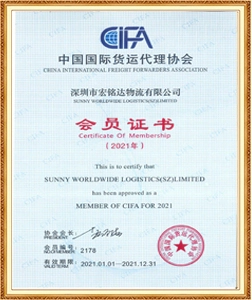
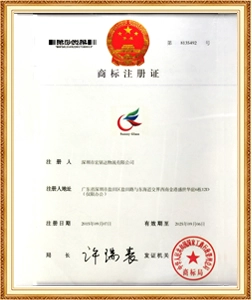
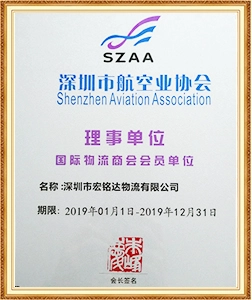
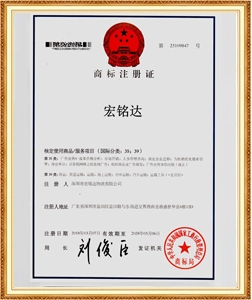
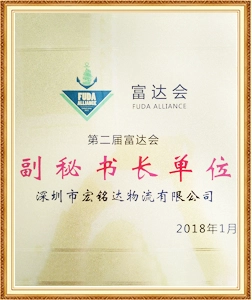
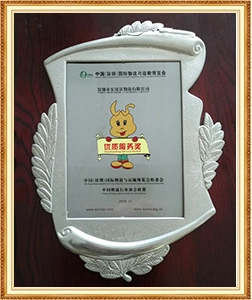
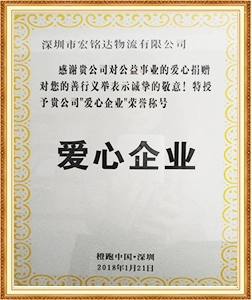
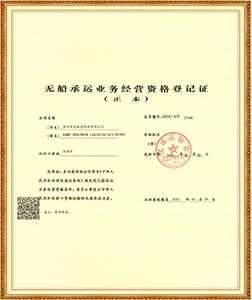
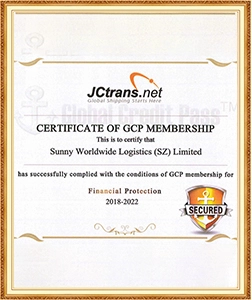
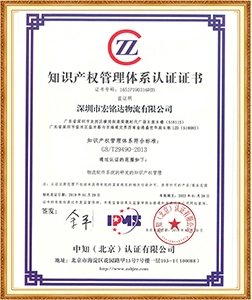
- Certifications
-
- Follow us
- Subscribe
-
Get email updates on new products
China to Taiwan Door to Door Air Sea Shipping Service
- Destination:Taiwan
- Departure Day:Taiwan
- Transit Time (Days):35 Days
- Shipment Type:All Types
- Type:Freight Forwarder Sea Cargo
China to Taiwan Door to Door Air Sea Shipping Service
The Short Answer
The cross-strait route is one of the shortest in this series and one of the most document-sensitive. Whether a shipment can move at all is decided by the tariff line rather than by the freight: each line in the tariff schedule carries a code indicating that mainland-origin goods are permitted, controlled, or barred, and a line marked "EX" opens only the goods whose name matches exactly. The price comes second. So the practical order is the reverse of a European lane, where the rate is the argument and the paperwork follows.
What a Booking Covers
The service runs from collection in China through export declaration at the mainland port, the crossing, the entry lodged at the Taiwan port by a licensed broker, duty, business tax and the trade promotion fee, release, and delivery to the address.
Under DDP we arrange the entry through an importer registered at the Taiwan end, fund the charges, and deliver. Under DDU we hand the documents over at the destination port and the consignee's own broker declares.
Two Questions That Come Before the Term
May this line carry mainland-origin goods?
The tariff schedule assigns an input code to every line. Where the codes for barred and controlled mainland goods are absent, the line is open and no permit is needed. Where a control code appears, an approval has to be obtained from the competent authority before a declaration can be lodged. Where a line carries the "EX" marking, only goods answering to the listed Chinese and English descriptions are open, which turns on wording rather than on product family.
This is why we ask for the HS code before we quote. A line that reads open in one year can be reclassified, and a product that ships freely in one configuration can sit in a closed line in another. The check is done against the current schedule, on the day, for the specific description.
Who is the importer on the declaration?
A declaration at the Taiwan port is lodged by a licensed customs broker on behalf of a registered importer. That registration is a prerequisite rather than a formality, and it is the point where DDP and DDU genuinely diverge: on DDP we need an importer of record we can act through, on DDU the consignee provides its own.
Four Crossings, Ordered by Document Risk
The routes are listed from the simplest paper trail to the most involved, which is not the same as from the shortest to the longest.
1. Direct cross-strait container service. Vessels sail from Xiamen, Fuzhou, Quanzhou and Pingtan to Keelung, Taipei, Taichung and Kaohsiung, and from ports further north on a longer rotation. One bill of lading, one entry, one set of label requirements. This is the default for full containers.
2. The small three links. Xiamen to Kinmen and Fuzhou to Matsu carry small lots on short sea crossings before an onward movement to the main island. Useful for samples and urgent replacement parts, with an extra domestic leg and its own documentation.
3. A routing through a hub port. When no direct service fits the sailing window, cargo can be relayed through a transshipment port. It adds a second document set without changing origin, so the tariff-line question is answered exactly as it would have been on a direct sailing.
4. Air through Taoyuan. Machinery spares, samples and high-value electronics move by air in a few days, and the same declaration, tax and labelling rules apply at the airport that apply at the seaport.
What the Port Charges
Duty is calculated on the duty-paying value, which is the cost, insurance and freight figure converted into local currency, multiplied by the rate for the line.
Business tax follows at 5 per cent, and it is charged on the duty-paying value plus duty plus any commodity tax, so it compounds rather than sitting alongside. Commodity tax applies only to the categories named in the commodity tax statute, which is why two containers with the same value can carry different totals.
The trade promotion fee is charged at 0.04 per cent of the duty-paying value and is waived where the amount would be under one hundred local dollars. Small, but it appears on every declaration and buyers query it.
Two administrative facts matter as much as the rates. The declaration has to be lodged within fifteen days of the carrying vehicle's arrival, and a late declaration attracts a daily penalty thereafter. And every declaration is filed by a licensed broker: there is no self-declaration channel for an overseas shipper, which is the structural reason DDP on this route means working through a registered importer rather than around one.
A further saving exists for goods on the early harvest list, where a certificate of origin issued on the mainland supports a preferential rate. It is worth checking before the invoice is finalised, because the certificate has to be obtained at origin and cannot be produced later.
Why Shippers Route Cross-Strait Cargo Through Us
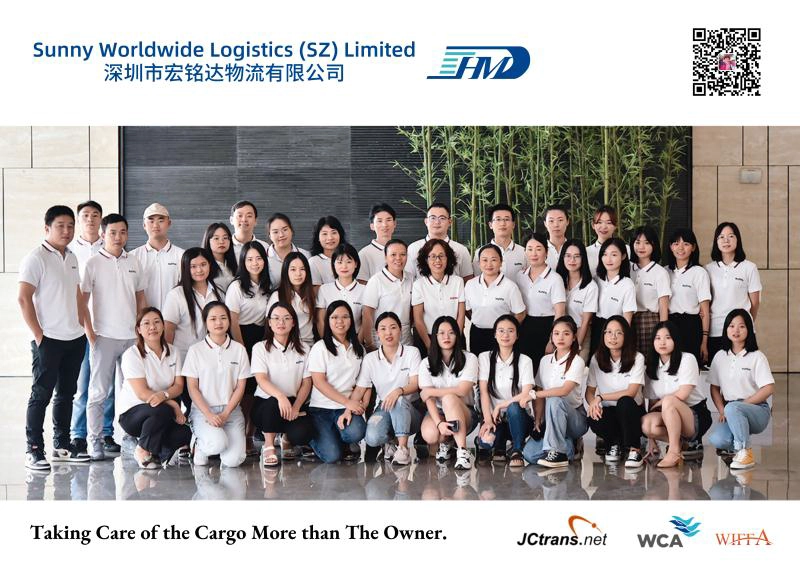
Sunny Worldwide Logistics (SZ) Limited has handled freight since 1998 and works from Shenzhen as a full-service forwarder with its own trucking company at the sea port, which puts the container at the mainland terminal under the same desk that prepares the documents.
On this route the value of that is diagnostic rather than commercial. The first question a shipper asks is what it will cost, and the first question that decides the answer is whether the line is open. Running both from one desk means the schedule is checked before a price is offered, instead of a price being withdrawn after the goods are packed.
Cargo We Move Across the Strait
- Machine parts, moulds and production tooling
- Electronic components, connectors and power supplies
- Packaging materials, labels and printed matter
- Textiles, apparel accessories and footwear components
- Hardware, hand tools and DIY sets
- Laboratory supplies and industrial consumables
- Sample lots and exhibition cargo on tight dates
What We Need Before Booking
- The HS code for each line, and the Chinese description used on the mainland invoice
- A photograph of the product and its packaging, so the description can be matched to the line
- Confirmation of whether an approval or certificate of origin is required
- The consignee's registered importer details and its broker, where DDU
- Chinese-language label artwork showing the required importer information
- Commercial invoice, packing list and the bill of lading instructions
- The delivery address, and whether the site receives a full container or requires devanning first
About the Company Filing Your Cross-Strait Entry
Founded in 1998, Sunny Worldwide Logistics (SZ) Limited operates as a full-service domestic and international forwarder based in China, with a 1,800 square metre Class A office in Shenzhen and its own trucking operation at the sea port.
Samira Chen / Sunny Worldwide Logistics (SZ) Limited / 8/F, Block B, Rongde Times Square, Henggang Street, Longgang District, Shenzhen, China / phone and WhatsApp +86 13428330724 / Trade Manager cn220161160 / sales38@swwlogistics.com.cn
Questions Shippers Ask About Cross-Strait DDP
Q: Can any product made on the mainland be shipped to Taiwan?
A: No. Every tariff line carries an input code, and lines marked for barred or controlled mainland goods need an approval before declaration. Lines marked "EX" open only goods matching the listed description, so the wording has to be right.
Q: How are the charges calculated?
A: Duty on the duty-paying value at the line's rate, business tax at 5 per cent on the duty-paying value plus duty plus commodity tax, and a trade promotion fee of 0.04 per cent. Commodity tax applies only to the listed categories.
Q: Do we need our own company at the destination?
A: For DDU, yes: the consignee must be a registered importer, and the declaration is filed by a licensed broker. For DDP we arrange that side, which is only possible with a registered importer of record in place.
Q: Which ports do you use?
A: Xiamen, Fuzhou, Quanzhou and Pingtan for the shortest crossings, with northern ports on longer rotations, arriving at Keelung, Taipei, Taichung or Kaohsiung. Small lots can use the small three links, and urgent cargo goes by air.
Q: How long does it take?
A: Two to five days at sea on the direct services, six to twelve days door to door once clearance and delivery are counted, and three to five days by air.
Q: What about labels?
A: Regulated categories need Chinese-language labelling carrying the importer's details, and the artwork is checked before the goods leave, because reprinting at the destination costs more than the freight difference between two quotes.
Get a DDP or DDU Figure for Taiwan
Send the product list with HS codes and a description of what each item actually is. We will check the line against the current schedule, tell you whether an approval or a certificate of origin is needed, and quote on that basis.
Write to Samira Chen at sales38@swwlogistics.com.cn with the line list, or call +86 13428330724 and describe the product, since the description is what the entry turns on.
Tel:+8613534256934
Wechat:13534256934
Contact Person:Samira

- Other Products