
















collapsed, and exports to the United States plummeted by nearly 50%...
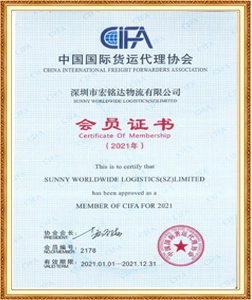
Sunny Worldwide LogisticsIt is a logistics company with more than 20 years of transportation experience, focusing on markets such as Europe, the United States, Canada, Australia, and Southeast Asia. It is more of a cargo owner than a cargo owner~

Swiss watch exports continued to decline in October, Exports to the United States plunged nearly 50% !
Swiss watch exports have fallen for a third consecutive month, weighed down by Trump's tariffs.
Data released by the Federation of the Swiss Watch Industry on Thursday showed that watch exports fell 4.4% year-on-year to 2.2 billion Swiss francs (approximately US.7 billion) in October.
Among them, exports to the United States, the largest export market, plummeted by 47%; while exports to the Chinese market achieved growth for the second consecutive month, with exports rising by 13%.
Last week, the United States announced that it would reduce tariffs to 15%, bringing a glimmer of hope to the industry, although the specific effective date of the new tax rate has not yet been determined.
According to data from the Federation of Watches and Clocks, prices of lower-priced watches (<3,000 Swiss francs) increased in October, but higher-priced watches (>3,000 Swiss francs) fell by 7%, partially offsetting the impact of price increases.
Previous report: The United States and Switzerland reached a trade agreement to reduce tariffs on Swiss goods to 15%
According to CCTV News and other media reports, on Friday (November 14) local time, the Swiss government announced that it had reached a trade agreement with the United States. The tariffs imposed by the United States on Swiss products will be reduced from the current 39% to 15%. In exchange, Swiss companies promised to invest US0 billion in the United States by the end of 2028.
When announcing the agreement, Swiss Federal Councilor and Minister of Economy, Education and Research Parmland said: "This trade agreement puts Switzerland on the same level as the EU and reduces the tariff rate from 39% to 15%, which will affect about 40% of Switzerland's exports."
Pamlan added: "Of course, we prefer that the US0 billion can be invested in Switzerland. Therefore, the Federal Council is also working hard at the same time to study how to further reduce the operating costs of domestic enterprises."
U.S. Trade Representative Jamison Greer said earlier that the White House would release relevant details later on Friday. Greer also revealed that Switzerland has committed to buying more commercial aircraft from Boeing.
Helena Budrig Atida, head of the Swiss National Economic Secretariat, claimed that the lower tariff rate will take effect "within days or weeks", pending the completion of technical adjustments to the U.S. customs system. She revealed that most of Swiss investment in the United States will come from the pharmaceutical and life sciences fields, but did not provide specific company information.
The pharmaceutical industry is Switzerland's largest export sector to the United States. Greer added that the agreement will promote "the relocation of a lot of Swiss manufacturing to the United States - pharmaceuticals, gold refining, railway equipment, and we are very excited about that."
The agreement also sets a 15% tariff ceiling for Swiss pharmaceutical companies (including Roche and Novartis) to protect them from the impact of Trump's upcoming Section 232 "national security tariffs", in which the tax rate on some patented drugs may be as high as 100%.
Parmland emphasized that the 15% upper limit also applies to other Section 232 areas, including semiconductors. As a result, Switzerland has the same treatment as the EU, and the risk of higher industry tariffs is completely eliminated.
The Swiss government said in a statement that the tariff agreement covers neighboring Liechtenstein and will reduce Switzerland's import tariffs on U.S. industrial products, fish, seafood and agricultural products that Switzerland considers "non-sensitive".
Data show that the goods trade surplus between Switzerland and the United States will be US.3 billion in 2024; it will expand to US.7 billion in the first seven months of 2025, mainly due to the United States stockpiling a large amount of goods in advance in the first quarter of this year before Trump implemented "reciprocal tariffs" in early April.
Nicola Tettamanti, president of Swissmechanic, the Swiss Association of Small and Medium-sized Manufacturers, said: "This is a major benefit for the industrial sector, which has been subject to 39% tariffs since August 1. For the first time, we have the same conditions as European competitors in the US market."
Hans Gersbach, director of KOF, a Swiss economic research institution, claimed: "This has greatly reduced the pressure on tariffs, but Switzerland still faces additional economic burdens and risks." He predicts that industries exporting to the United States such as machinery, precision instruments, watches, and food will benefit the most.
KOF predicts that Switzerland's economic growth rate will be 0.9% in 2026, but with the reduction of tariffs, this growth rate may exceed 1%.