- Browse Categories
- Sea Freight
- Air Freight
- Railway Freight
- FBA Amazon
- Express Service
- Warehouse Service
- Trucking Service
- Custom Clearance
- SOC container shipping
- Contact Us
-
TEL:+86-755-25643417
Fax: +86 755 25431456
Address:Room 806, Block B, Rongde Times Square, Henggang Street, Longgang District, Shenzhen, China
Postcode: 518115
E-mail: logistics01@swwlogistics.com.cn Contact Now
- Hot products

- Latest NewsMore>>
-
- 20FT open side SOC container ship from Qingdao to UK
- Only 30% of the world's ships arrive at ports on time, and the European line's on-time rate is 4%. Cargo owners and freight forwarders need to be wary of delivery risks
- SOC container shipping service 20GP to Senegal from China
- Will Suez "mostly return" in Q1 2027? Gemini takes the lead in adjusting the Asia-Mediterranean route, and the transit ports and ports of call are all changing
- Maersk adjusts automatic cancellation rules for bookings
- 20GP SOC Container Shipping Logistics from China to Dakar Senegal
- With a maximum of US$1,600/container, the three major shipping companies have successively raised surcharges, putting Asian export costs under pressure again
- 20HQ New SOC Container Shipping Service from China to Southampton
- The opening ceremony of Hong Kong Maritime Week 2026 will be held from November 15th to 21st
- SOC container shipping service to Germany from Shanghai
- New SOC Container Shipping Service from China to Senegal
- Qiankai transit, sea and air relay, China to Brazil logistics speed up again
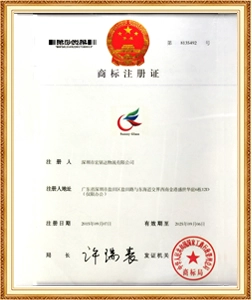
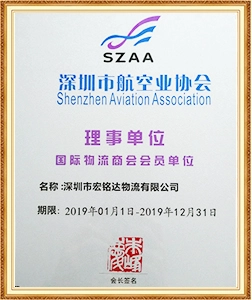
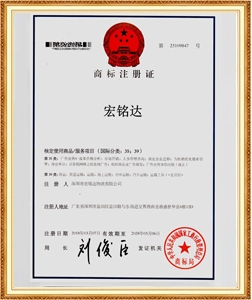
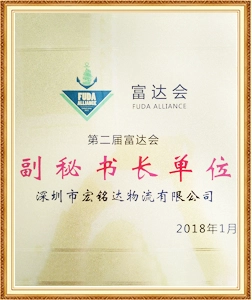
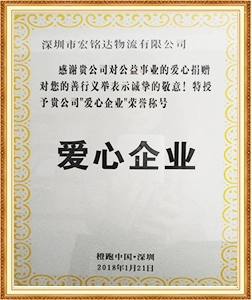
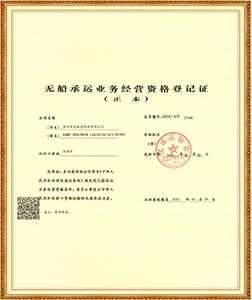
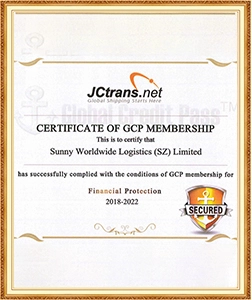
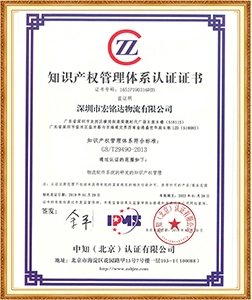
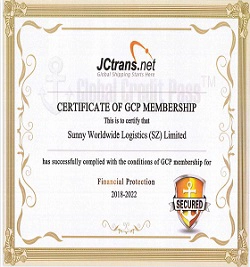
- Certifications
-

- Follow us
- Subscribe
-
Get email updates on new products

China to Belgium Door to Door Shipping Fost Plus Valipac
- Destination:Belgium
- Departure Day:Belgium
- Transit Time (Days):35 Days
- Shipment Type:All Types
- Type:Freight Forwarder Sea Cargo
China to Belgium Door to Door Shipping Fost Plus Valipac
The Short Answer
Belgium puts a packaging question in front of the price question. Household packaging and commercial or industrial packaging occupy two separate compliance streams, Fost Plus for the first and Valipac for the second with wood included, and the stream is set by how a pack is used rather than what it is made from. A shrink-wrapped pallet and a printed retail carton can share one polymer and still belong on different declarations. Under DDP the importer role is ours and that stream decision lands with us; under DDU the consignee files, and often files into the wrong stream the first time.
What a Belgian Booking Covers
One contract carries the goods from your supplier's door to a Belgian address: collection, the export declaration, the ocean or air leg, the import entry at the Belgian border, duty and VAT settlement, and delivery. Belgium is also where many consignments stop being Belgian, because cargo released here moves freely onward into France, the Netherlands and Germany, so the entry is frequently cleared for a wider distribution plan than the delivery address implies.
Written as DDP, the entry sits in our name. We appear as importer, settle duty and the 21 per cent VAT, and the consignee receives cleared cargo against a single invoice with the packaging declaration already lodged in the correct stream.
Written as DDU, the consignee clears in its own name, funds duty and VAT at release, and inherits the packaging filing as the party that first placed the pack on the Belgian market.
What Changes If You Move From DDU to DDP
Five things move at once, and only one of them is a price.
- The importer name. The entry switches from the consignee's VAT number to ours, which also switches who answers a post-clearance query.
- The cash at release. Duty and the 21 per cent VAT leave our account rather than the buyer's, and the recovery cycle becomes ours to manage.
- The packaging declaration. The party that first places the pack on the market files it; changing the importer can therefore change who belongs in Fost Plus or Valipac.
- The classification risk. A challenged commodity code is argued by whoever lodged the entry, so the exposure follows the term rather than the goods.
- The invoice route. Belgian B2B e-invoicing became mandatory on 1 January 2026, so a DDP invoice has to be issuable in a structured format, not only as a PDF.
Routes into Belgium
- Antwerp-Bruges — the container gateway, created when Antwerp and Zeebrugge merged in 2022, with deep-water berths that take the largest Asia strings; 30 to 42 days door to door.
- Zeebrugge — ro-ro and automotive volumes plus short-sea feeders into the United Kingdom and Scandinavia.
- Liège — the heaviest cargo airport in the country by tonnage, grown on integrator and e-commerce traffic; 5 to 8 days door to door by air.
- Brussels — pharmaceutical and general freight, with strong temperature-controlled handling for life-science cargo.
- Rail — block trains from China terminate at hubs such as Duisburg or Tilburg and Belgium is reached by road from there, landing at 22 to 30 days door to door.
Belgium's Two Packaging Streams
Household goes to Fost Plus, industrial goes to Valipac
Fost Plus handles the packaging that ends up in Belgian households. Valipac covers commercial and industrial packaging, wood pallets included. Both operate under the interregional cooperation agreement that runs across Flanders, Wallonia and Brussels, and either can be replaced by an approved individual compliance route. What the authority tests first is the use of the pack, not its material.
The stream follows use, not polymer
A retail carton and a transit pallet can be the same plastic and belong to different streams. Keeping them apart needs a ledger per stream rather than one packaging total, because a declaration filed against the wrong stream survives a flawless weight spreadsheet and still fails as a filing.
The 300 kilogram line is not an exemption
Belgian guidance ties the take-back duty to an annual threshold of 300 kilograms, while prevention-plan tests use 100- and 300-tonne figures. Those numbers answer different legal questions. Reading 300 kilograms as a general pass is how a modest importer meets the obligation for the first time after a delivery rather than before it.
Who counts as the responsible company
The obligation follows whichever party first makes the packaging available in Belgium: the packer, the importer, or a business that unpacks imported goods and releases them. That is why the DDP or DDU choice changes the packaging answer as much as the customs one, and why a distributor's membership number cannot simply be borrowed by a seller importing under its own name.
VAT, and the Union Rules Above It
Belgian VAT stands at 21 per cent on the standard rate, with 12 and 6 per cent held for defined categories. Most imported consumer lines fall on the 21 per cent band, so a quotation built on a reduced rate deserves a second look before it is sent.
Two union-level dates now sit in the same file. Consignments below 150 euros stopped entering duty-free on 1 July 2026 and carry a flat 3 euros per category until 1 July 2028. Since 12 August 2026 the packaging and packaging waste regulation has applied directly in every member state, and it issues no single union-wide producer number, which leaves the Belgian stream and the Belgian registration to be filed on their own.
On the customs side, import declarations are moving from PLDA to the Import Declaration Management System, so the message format a broker works in is worth confirming rather than assumed.
Why Shippers Route Belgian Cargo Through Us
Belgian consignments are usually pooled before they are Belgian. One entry at Antwerp-Bruges can feed a distribution centre serving four countries, so the value declared at the border sets the duty on goods that never reach a Belgian shelf. Sunny Worldwide Logistics (SZ) Limited holds the commercial invoice, the packing list and the entry in one file for exactly that reason, and collects the container with its own fleet at the Shenzhen terminal instead of handing it to a third-party hauler.
The packaging ledger is the part suppliers underestimate. Two streams mean two sets of weights, and those weights have to reconcile against the invoice before the declaration goes in, not afterwards.
Cargo We Move into Belgium
- Industrial machinery, machine tools and spare parts
- Consumer electronics, small appliances and accessories
- Furniture, lighting and contract interiors
- Automotive parts, tyres and motorcycle accessories
- Medical devices and laboratory equipment
- Textiles, apparel and footwear
- E-commerce replenishment stock and marketplace inventory
The Company Behind the Entry
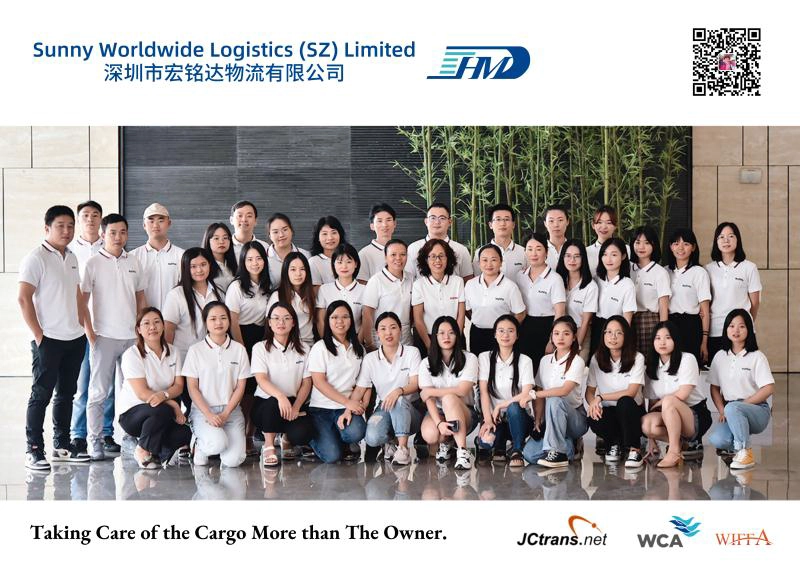
Sunny Worldwide Logistics (SZ) Limited has moved freight out of Shenzhen since 1998, working as a domestic and international forwarder with transport capacity of its own rather than a brokered network. A 1,800 square metre Class A office in Shenzhen and a trucking company at the sea port keep collection, terminal handling and documentation with the same organisation that lodges the Belgian entry.
Samira Chen / Sunny Worldwide Logistics (SZ) Limited / 8/F, Block B, Rongde Times Square, Henggang Street, Longgang District, Shenzhen, China / phone and WhatsApp +86 13428330724 / Trade Manager cn220161160 / sales38@swwlogistics.com.cn
Questions Importers Ask About Belgian DDP
Q: Do we have to join both Fost Plus and Valipac?
A: No. The stream decides, not the volume: household packaging belongs with Fost Plus, commercial and industrial packaging with Valipac, and an approved individual route can replace either. A seller with both consumer and trade packaging needs both ledgers, and needs them kept apart.
Q: Is the 300 kilogram figure an exemption from packaging registration?
A: It is not a general exemption. It is the annual threshold attached to the take-back duty, and the prevention-plan tests use different figures measured in tonnes. Treating 300 kilograms as a universal pass is a common way to discover the obligation after the first shipment has landed.
Q: Who is the responsible company when we sell through a Belgian distributor?
A: The party that first makes the packaging available on the Belgian market. Where a distributor imports and resells, that is usually the distributor; where the seller imports in its own name, the obligation travels with the seller, and a distributor's scheme number will not cover it.
Q: Which VAT rate will apply to our goods?
A: Twenty-one per cent for most imported goods, with 12 and 6 per cent reserved for defined categories. The rate is not negotiable at the border, so a quotation that assumes a reduced band for a product outside those categories will be short by the difference.
Q: Is Antwerp the only practical entry point?
A: No. Antwerp-Bruges carries the container volume, Liège and Brussels carry the air freight, and goods can also be released in another member state and moved to Belgium in free circulation, which sometimes shortens the inland leg at the cost of a second jurisdiction.
Q: Does a DDP price include the packaging scheme fee?
A: Under DDP we hold the importer role, so the scheme fee is a cost line we carry and show inside the rate. Under DDU it belongs to the consignee, and it is worth confirming which side of the quotation it sits on before the goods leave China.
Get a DDP or DDU Figure for Belgium
Send the commodity, the carton count, the delivery postcode and the packaging materials split into household and industrial. That split is not a formality here: it decides which scheme the goods belong to, and it changes the all-in number before freight does.
Two quotations come back on the same consignment, one with duty, VAT and the scheme fee inside the price and one stopping at delivery. Write to Samira Chen at sales38@swwlogistics.com.cn, or call and message +86 13428330724, and a figure normally follows on the next working day.
Tel:+8613534256934
Wechat:13534256934
Contact Person:Samira

- Other Products