






























Maersk lays off employees, analysts predict Maersk may face significant risk of losses in 2026
Sunny Worldwide LogisticsIt is a logistics company with more than 20 years of transportation experience, focusing on markets such as Europe, the United States, Canada, Australia, and Southeast Asia. It is more of a cargo owner than a cargo owner~

Against the background of sluggish global trade recovery and recurring geopolitical conflicts, shipping giant Maersk has been in trouble recently. On the one hand, the company started optimizing its warehousing network in the United States, with two warehouses closed and 49 people facing unemployment; on the other hand, many institutions predict that its profits will decline sharply in 2026, and in extreme cases it may even fall back into losses.
North American warehousing "downsizing": closing two facilities and laying off 49 people
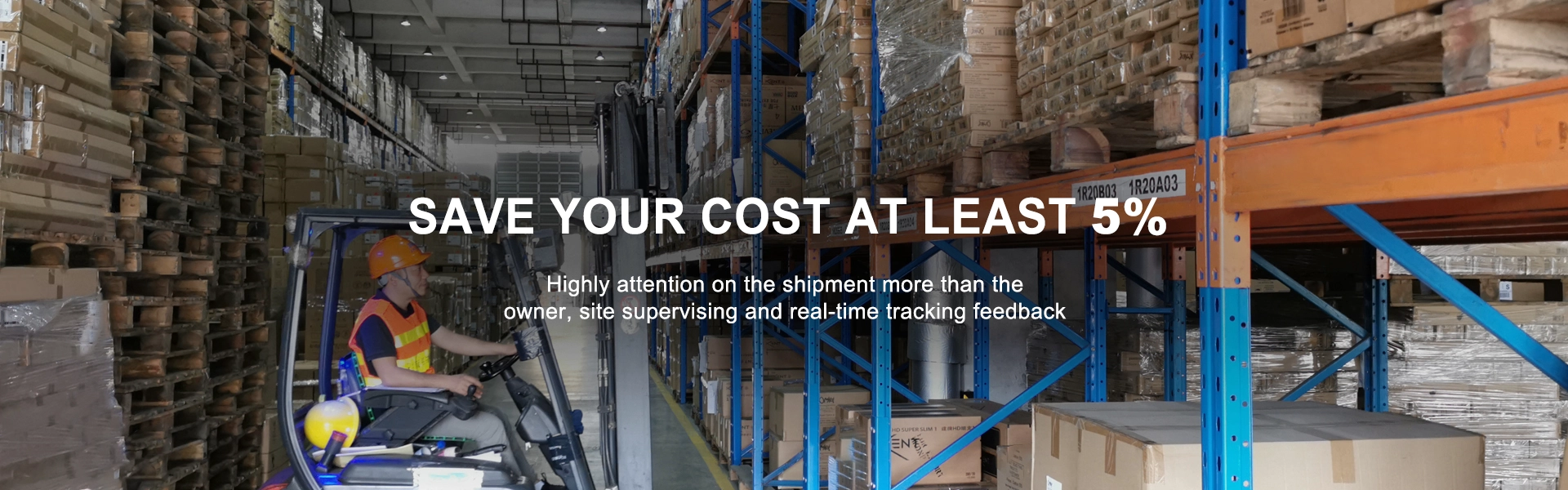
Maersk plans to close two warehouses in Lakewood and Sumner, according to documents filed with the Washington state Employment Security Department. Among them, the Lakewood warehouse is expected to close at the end of June, laying off 44 people; the Sumner warehouse will cease operations in mid-July, laying off 5 people. Although Maersk has not made a public statement on this, industry observers generally believe that this is a proactive cost reduction move in response to fluctuations in the global supply chain and cooling demand in North America.
In fact, the "stay-at-home economy" dividends brought about by the epidemic have long since faded, container freight rates have returned to normal, and retailers continue to destock, the North American warehousing and inland transportation market has cooled down significantly. For Maersk, appropriately shrinking the warehousing network and reducing fixed costs can be regarded as a rational choice to adapt to the current situation.
Profit warnings out: Analysts collectively bearish on 2026
Rather than axing several warehouses, the capital market is more worried about how long Maersk's profitability can last. Institutions such as JPMorgan Chase and Denmark's Jyske Bank have recently spoken out, predicting that Maersk's full-year performance guidance for this year will be brought back to its original form.
Haider Anyum, a shipping analyst at Jyske Bank, was blunt: "The reduction is inevitable, and the possibility has increased significantly." The bank expects Maersk to reduce its EBITDA and EBIT forecasts in 2026 by about US0 million overall. Adjusted EBITDA may be between US billion and US.5 billion, while EBIT ranges from a loss of US billion to a profit of US0 million - which means Maersk is likely to experience losses again.
JP Morgan's forecast is even more pessimistic: Maersk's EBITDA in 2026 will be only about US.1 billion, and EBIT is more likely to lose US.6 billion. If materialized, this would be Maersk's first annual loss since the outbreak.
As for when the guidance will be officially lowered, market speculation is likely to be when the first quarter report is released on May 7, and it is not ruled out that it will be delayed until the second quarter report.
The first quarter may not be bad, but that may be a “blip”
Interestingly, most analysts believe that Maersk’s performance in the first quarter of this year may not be too ugly, and may even slightly exceed expectations. The reason is simple: China's exports are recovering in stages, and the conflict in the Middle East has led to tight capacity on some routes, which has provided short-term support to freight rates.
However, Jyske Bank warned that this is most likely to be a "single success" in the first quarter, and the performance will gradually weaken in the next three quarters, showing a "high opening but low" trend throughout the year. In other words, the bright spot in the first quarter is just a shot in the arm and cannot change the overall downward trend.
Cost pass-through failure: Freight prices cannot rise, but oil prices are soaring
One of Maersk's biggest headaches right now is that rising costs cannot be effectively passed on to customers. Since the outbreak of the conflict in the Middle East, although shipping companies have repeatedly raised freight rates and added various additional charges, the overall freight rates have only increased by about 25%, and have dropped significantly recently. This increase cannot cover the skyrocketing fuel costs.
In addition, fuel surcharges are usually announced 30 days in advance, which means that during this month, the shipping companies have to bear the additional expenses caused by the increase in oil prices. As a result, Maersk's profit margins have been squeezed thinner and thinner.
Overcapacity is the real problem
From a longer-term perspective, excess capacity is the real time bomb. Alphaliner data shows that the current global new ship orders account for 36% of the existing fleet capacity, which is close to the peak level before the financial crisis in 2008.
New ships are being launched continuously, but freight demand is growing sluggishly. Once capacity growth continues to outpace demand growth, spot freight rates may face a 12% to 70% plunge. At the same time, rising energy prices will push up global inflation, weaken consumer purchasing power, and further "cold water" on shipping demand.
Multiple pressures have piled up, and the industry has entered a difficult period of adjustment.
Maersk has already warned in its annual report: the biggest risk in 2026 is the global economic downturn. Looking at it now, geopolitical conflicts, soaring costs, overcapacity, and weak demand—several mountains are coming at the same time, and the entire container industry is breathless.
For Maersk, layoffs and warehouse closures are to reduce costs, but the road to "increasing revenue" is getting narrower and narrower. Going from huge profits during the epidemic bonus period to normalized fierce competition has become a common issue faced by the industry. It now depends on whether Maersk can stabilize its position through cost control and business adjustments and survive this long downward cycle.