














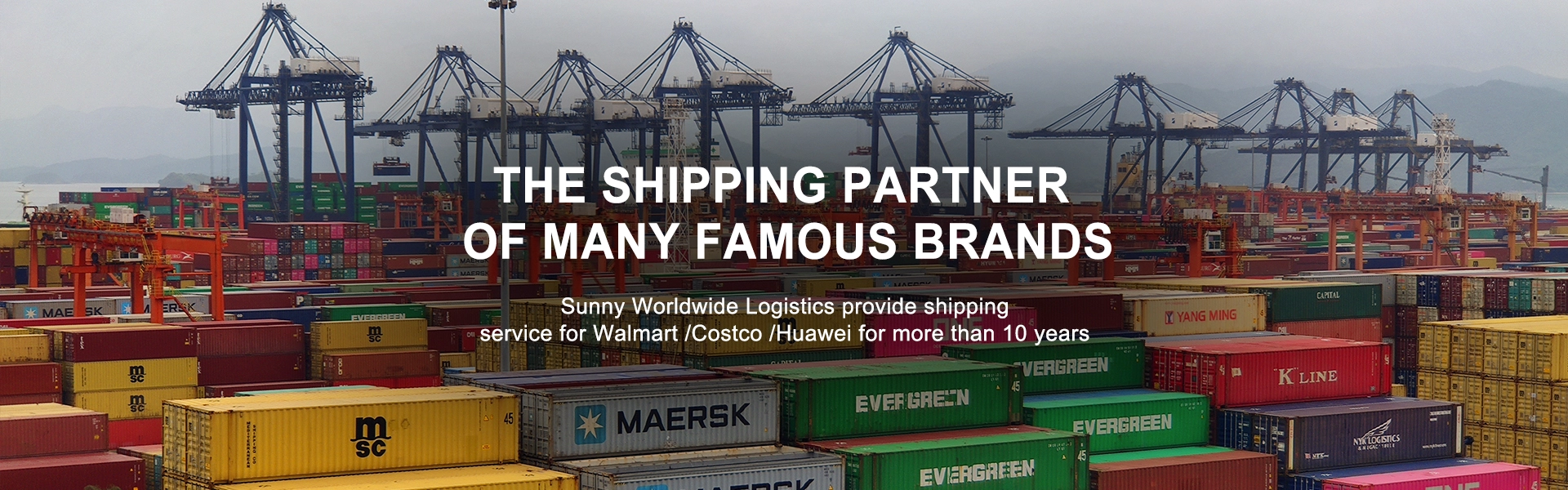

















Freight rates on the U.S. line and the Persian Gulf have soared, but global cargo volume has hidden signals of "excess capacity"
Sunny Worldwide LogisticsIt is a logistics company with more than 20 years of transportation experience, focusing on markets such as Europe, the United States, Canada, Australia, and Southeast Asia. It is more of a cargo owner than a cargo owner~

The latest data from Container Trades Statistics (CTS) shows that the volume performance of global container trade in the first two months of 2026 is actually not bad. Global shipping volume in January was 16.03 million TEU, a year-on-year increase of 4% and nearly 10 percentage points higher than in January 2024. The average daily processing volume was 517,000 TEU, a year-on-year increase of 3.5%. In February, affected by the Spring Festival, the month-on-month decline was 6.5%, but the absolute value of 15.04 million TEU was still the highest level in the same period in the past five years. The cumulative growth year to date is 8%, which is double the growth rate for the same period in 2025.
But the industry is not excited because freight rates have been going down. The global price index in January was 77 points, unchanged from the previous month, but 18% lower than January last year. It fell further to 74 points in February, returning to October 2025 levels. CTS's own judgment is very straightforward: "The softening of prices while the transportation volume remains high may indicate that there is excess capacity in the market." The price index was still 84 points in February last year, but fell by 10 points during the same period this year. An increase in volume and a decrease in price is a typical signal of excess shipping capacity.
Regional differentiation is obvious: imports from Africa and Europe surge, while demand from North America cools
From the import side, sub-Saharan Africa's imports surged by 33% year-on-year in February, and the cumulative increase since the beginning of the year is 22%. A large number of goods from the Far East and the Indian subcontinent are flowing to Africa, and the volume of goods from the Far East to Africa has increased by more than 60%. European imports also increased by 21%, mainly supported by Far East cargo sources. This trade corridor increased by more than 45% year-on-year.
The situation in North America is less optimistic. Imports fell by 8% in January, and imports in February were 2.6 million TEU, the lowest since February 2024. Exports were even worse, just over 1.1 million TEU, the lowest since January 2025. The rush to ship goods at the end of last year overdrawn part of the demand in advance, and coupled with the heavy inventory pressure on US retailers, imports will naturally decline this year.
European exports increased by 18% month-on-month in February, and all trade routes did not fall - exports to Australia and New Zealand, sub-Saharan Africa and the European region all increased by more than 5%. However, compared with the same period last year, European exports were still 3.4% lower, indicating that demand recovery after the holidays was slower than in previous years.
Exports from the Far East fell by 12.9% month-on-month in February, while exports from the Indian subcontinent and the Middle East fell by 8.1%, mainly affected by the Spring Festival and Ramadan. But the year-on-year figures are still good: the Far East grew by 18.8%, and the Indian subcontinent and the Middle East grew by 8.3%. Intra-regional trade in the Far East remains the main engine and this has not changed.
When looking at data, pay attention to the time difference and caliber difference.
It should be noted that the January-February data of CTS reflects the market conditions before the situation in the Middle East deteriorated overall - that is, when the Strait of Hormuz was not substantially blocked. The report itself made it clear that the February data did not yet fully reflect the impact of the current crisis.
The SCFI data from the Shanghai Shipping Exchange is a different story. SCFI's April data reflects the results of a series of operations by shipping companies since late March: reduced shifts and cabin control, superimposed surcharges, long-term contract negotiation windows, coupled with geopolitics pushing up oil prices, several forces have combined to push up spot freight rates. To put it simply, CTS talks about the market trend before the crisis, while SCFI talks about the structural differentiation after the crisis. The former is macroscopic and long-term, while the latter is microscopic and short-term. Both are correct, but the time dimension is different.
In addition, the calibers of the two indices are also different. CTS counts actual invoiced freight rates, reflecting real transaction prices, and is updated slowly but more "realistically"; SCFI tracks shipping company quotations and freight forwarding booking prices, reflecting current market sentiment, and is updated quickly but with large fluctuations. Only by comparing the two can we see clearly the gap between "overall trend" and "short-term abnormal changes".
It’s not just the American routes that are seeing price increases
Recently, industry media have been talking about the skyrocketing freight prices, especially the US line. However, judging from the latest SCFI data, it is far from just the US line that has seen price increases.
Let’s look at the overall trend first. The SCFI index began to rebound from 1826.77 points in late March. It rose 7.02% in a single week on March 27, rose to 1854.96 points on April 3, and further rose to 1890.77 points on April 10, achieving "three consecutive gains."
View by route:
Persian Gulf Line: On April 10, it reported US,167/TEU, a weekly increase of 4.78%, rising for six consecutive weeks. This is the first time since the SCFI index was compiled in October 2009 that the freight rate of the Persian Gulf line has exceeded US,000, exceeding the historical high of US,960 set during the epidemic in September 2021. According to industry estimates, freight rates on this route have doubled since the conflict broke out. But the reality is that this route is still in a "price but no market" state - the price is there, and there are not many actual transactions.
US West Line: On April 10, it was reported at ,552/FEU, a weekly increase of 8.18%; US Eastern Line was reported at ,518/FEU, a weekly increase of 4.89%. The freight rates on the west line from Asia to the United States have increased by 24% compared with before the implementation of GRI on April 1, and the freight rates on the east line in the United States have increased by 20%.
South America line: less consistent performance. On April 10, the freight rate from Shanghai to the basic port in South America was US,501/TEU, which has declined somewhat, and the overall demand has cooled down compared to the previous period.
Australia-New Zealand Line: Weekly increase of 6.9%, due to strong transportation demand coupled with shrinking capacity and a shortage of shipping space.
Intra-Asia routes: The increase is not large but the trend is clear.
European lines are the notable exception
European and Mediterranean routes have not kept up with this wave of price increases. SCFI data on April 10 showed that the freight rate per TEU from the Far East to Europe was US,547, a weekly decrease of 6.24%; that to the Mediterranean was US,590 per TEU, a weekly decrease of 3.5%. The interpretation is simple: there is a lack of effective support on the demand side, inadequate suspension of routes, overall ample supply of transport capacity, and freight rates continue to decline.
How do shipping companies push up freight rates?
In this round of U.S. line price increases, shipping companies have made a combination of moves.
The first step is to reduce shifts and control cabins. Shipping companies continue to tighten the supply of transportation capacity through empty flights, especially on the US East route, and the intensity of flight reduction is not small. The Ningbo Shipping Exchange pointed out that the increase in the number of suspended flights on the U.S. East Route has led to continued tight space, driving up freight rates; the weekly increase in the freight index on the U.S. West Route has been as high as about 15 percentage points.
The second trick is to superimpose surcharges. The rise in oil prices has directly pushed up operating costs. The price of low-sulfur fuel has climbed to US0-820 per ton, a three-year high. Naturally, the shipping company will not carry it on its own. Since April, Maersk, CMA CGM, Hapag-Lloyd and Mediterranean Shipping Company have successively announced a number of surcharge adjustments, involving flat rates, peak season surcharges, overweight surcharges, etc., with the adjustment amounts ranging from US0 to a maximum of US,800. Typical cases include: Mediterranean Shipping Company will increase the emergency fuel surcharge on the Asia to North America route from May 1, with the US West Route increasing by 70% to US7/FEU, and the US East Route increasing by 50% to US4/FEU; CMA CGM will increase the emergency fuel surcharge on the Far East to US4/FEU from April 15. Port Louis, Mauritius, levies a peak season surcharge of US0/TEU; Maersk simultaneously raises freight rates for Asia-Europe and the United States lines, superimposing war risk surcharges and carbon emission surcharges, among which the war risk surcharge standard for routes to the Middle East reaches US,500/TEU.
The third trick is the long-term contract negotiation window period. April is a critical period for annual long-term contract negotiations on U.S. lines. Shipping companies need to increase spot prices to support long-term contract quotes. Industry insiders predict that there will be another wave of gains in late April as market demand changes.
The hidden concern of overcapacity still exists
However, how long the shipping company can sustain this round of operations is a question. In 2026, global shipping capacity is expected to grow by 3.6% to 5%, while demand growth is only 1.5% to 3%. This scissor gap will be realized sooner or later. The price index of CTS has been falling for two consecutive months, indicating that the supply and demand relationship in the overall market has not fundamentally improved. This wave of price increases for American lines is more driven by artificial contraction and cost on the supply side than by explosive growth in demand. Once shipping companies relax their efforts to reduce shifts or new ships are delivered intensively, there will be considerable pressure for freight rates to fall back.
The continued decline in European-European-European line freight rates also illustrates a problem: on routes lacking supply-side control, the market's true supply and demand relationship is still the dominant factor in the weakening of freight rates.
The data for the first two months gives a good starting point, but the trend of rising volume and falling prices shows that the market is not that optimistic. Demand in North America is ebbing, Africa and Europe are taking up the slack, and the Far East still accounts for the bulk. Driven by geopolitics, the Persian Gulf line has reached a record high, the American line has continued to rise due to the superposition of shipping companies' space control and surcharges, and the Australia-New Zealand line has increased significantly due to shrinking capacity. However, the European line has become an obvious exception due to the inability to keep up with demand. How long the shipping company's "active attack" on U.S. routes and intra-Asian routes can last depends on the direction of the geopolitical situation and whether the shipping company's efforts to reduce shifts and control cabins can be maintained.