














Indonesian port development presses the "acceleration button"
Sunny Worldwide LogisticsIt is a logistics company with more than 20 years of transportation experience, focusing on markets such as Europe, the United States, Canada, Australia, and Southeast Asia. It is more of a cargo owner than a cargo owner~

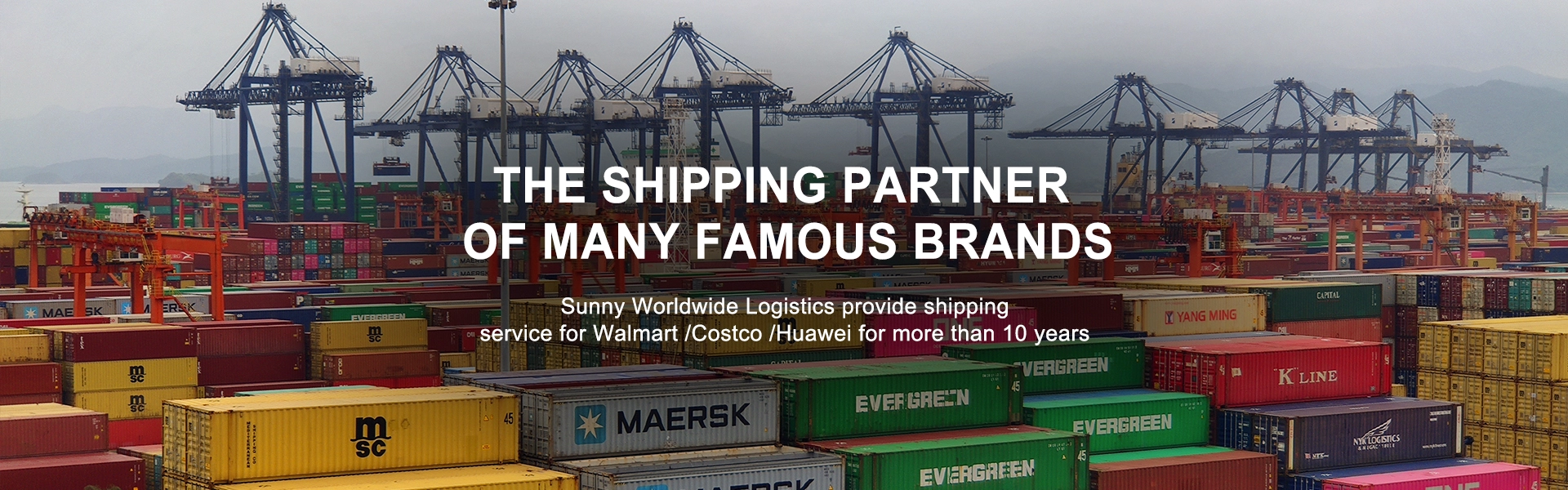
Recently, Indonesian Ports and Terminals Co., Ltd. (PTK), a subsidiary of Indonesian state-owned holding company Pelindo, released data showing that the 32 terminals it manages will handle a total of 13.3 million TEUs in 2025, an increase of 6.9% from 12.5 million TEUs in 2024. PTK attributed its performance growth to Indonesia's overall economic growth, advancement of industrialization and improvement in global trade status. Domestic shippers' shift from bulk cargo transportation to container transportation also provided support for business growth.
Data shows that 67% of the containers handled by PTK in 2025 (more than 8.9 million TEUs) will come from Indonesian domestic coastal and intra-island transportation. In recent years, PTK has promoted the containerization of intra-island trade by renovating port terminals, improving infrastructure, purchasing quay cranes and yard equipment, and helping enterprises related to remote islands to participate in international competition. In terms of international business, PTK's international cargo throughput will increase by 10.3% year-on-year in 2025, reaching more than 4.4 million TEUs. Among them, Trunk Lamon Terminal Surabaya (TLK) added 5 new services, and international container throughput increased by 25% year-on-year to 382,600 TEUs. The port's annual throughput reached 2.83 million TEUs, a year-on-year increase of 6%; Semarang TPK Semarang's cargo volume to South Korea, the United States, Japan and China all increased.
As Indonesia's largest port complex, Tanjong Priok Port's throughput will increase by 5.7% in 2025, reaching 8.03 million TEUs, benefiting from the growth of trade with China and Indonesia's progress in international cooperation. Indonesia joined the BRICS in January 2025 and signed the Comprehensive Economic Partnership Agreement (IEU-CEPA) with the European Union in September. The agreement is expected to take effect in January 2027 and will eliminate 98.5% of tariffs on export commodities from both parties, helping Indonesia to export related products and attract EU investment. Industry insiders said that the agreement marks Indonesia's transformation from a potential economy to a performance economy, and Indonesia's measures to promote industrialization and reduce dependence on primary industries have further boosted demand for container transportation.
In order to support business growth, Indonesia has increased investment in infrastructure and logistics networks in recent years, and foreign shipping and logistics companies have also increased services and expanded investment. At the same time, many ports in Indonesia are accelerating equipment upgrades and expansions: the second phase of the Kali Baru Terminal expansion project at Tanjong Priok Port is expected to be completed by the end of the year, which will add an annual throughput of 1.5 million TEUs; the New Priok Container Terminal Phase 1 (NPCT1) continues to purchase electric loading and unloading equipment, with the goal of reducing carbon emissions by 50% in 2030; TPK Koja Terminal introduced post-Panamax quay cranes and electric gantry cranes to improve operational efficiency; Jakarta International Container Terminal (JICT) cooperated with Sany Heavy Industry to introduce electric loading and unloading equipment; Bagendang Container Terminal (BCT) is also expanding equipment and extending operating hours. Its throughput will reach 75,200 TEUs in 2025, a year-on-year increase of 4%.
Despite significant progress, Indonesia's maritime and logistics infrastructure still lags behind its main competitors, and issues such as high transportation costs and environmental impacts still need to be addressed. Industry insiders pointed out that in the future, it is necessary to further improve ports and supporting facilities and coordinate relevant policies and rules in order to continue to enhance the competitiveness of Indonesian ports and its global trade status.