














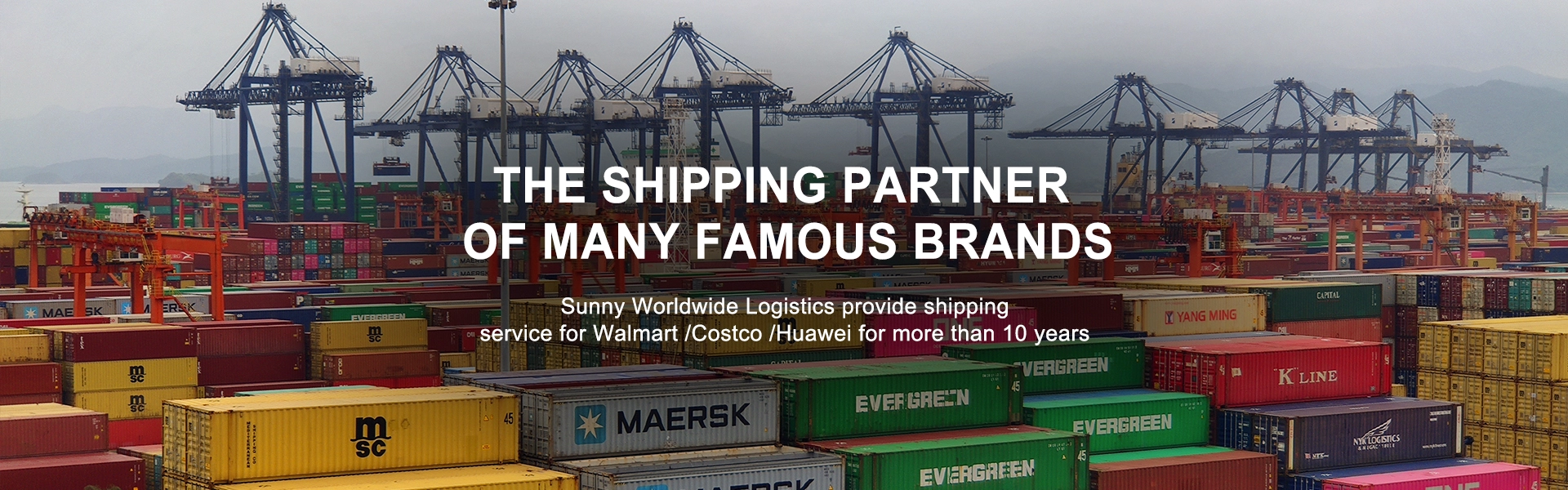

















The tense situation in the Red Sea coincides with the Spring Festival off-season, and freight rates in the global container shipping market continue to be under pressure
Sunny Worldwide LogisticsIt is a logistics company with more than 20 years of transportation experience, focusing on markets such as Europe, the United States, Canada, Australia, and Southeast Asia. It is more of a cargo owner than a cargo owner~

Recently, geopolitical tensions in the Middle East have once again affected the shipping industry. As the U.S. Navy fleet mobilized to the Middle East, Yemen's Houthi armed forces released a meaningful short video through social media, triggering a new round of market attention on the safety of the Red Sea waterway. However, the container shipping market itself is facing the challenge of weakening seasonal demand amid increasing geopolitical uncertainty. As the Chinese Lunar New Year approaches and the traditional peak shipping season comes to an end, the demand for ocean trunk transportation shows signs of weakness, driving market freight rates further downward.
The latest freight rate data confirms the weakening trend of the market. The Shanghai Export Container Comprehensive Freight Index (SCFI) released by the Shanghai Shipping Exchange on January 30 was at 1,316.75 points, down 9.7% from the previous week. Main routes:
Demand growth for European and Mediterranean routes is weak, and freight rates continue to decline. The freight rate from Shanghai to the European basic port was US,418/TEU, a decrease of 11.1%; the freight rate to the Mediterranean basic port was US,424/TEU, a decrease of 12.0%.
North American routes also lacked upward momentum. The freight rate from Shanghai to the US West fell by 10.4% to US,867/FEU, and the freight rate from Shanghai to the US East fell by 10.0% to US,605/FEU. The price difference between the two was US8.
Another authoritative indicator, the Drewry World Container Index (WCI), also showed a downward trend, reporting at ,107/FEU on January 29, down 5% on the week. Among them, the spot freight rates from Shanghai to major ports such as Los Angeles, New York, Rotterdam and Genoa all experienced decreases ranging from 4% to 7%.
The current complex Red Sea situation is prompting liner companies to adopt differentiated strategies. Fleets represented by Ocean Alliance mainly choose to continue sailing around the Cape of Good Hope in Africa; while Maersk, after careful evaluation, plans to maintain regular services on its India-US East Coast Line (MECL) via the Suez Canal. It is worth noting that as one of the suppliers of the U.S. maritime security plan, the special status of Maersk’s companies makes its ship movements attract the attention of all parties. Although the Houthis have expressed a certain "positive" attitude towards their resumption of navigation in the Red Sea, they have not made any security guarantees and related risks still exist.
In addition to freight rates and geopolitics, data on the ship scrapping market also reflects the current status of the industry. According to Alphaliner statistics, only 12 container ships will be scrapped in the world in 2025, with a total transport capacity of 8,172 TEU, setting a record low in the past two decades. The agency's analysis pointed out that the strong transportation demand and strong rental levels in the past year have made shipowners more inclined to operate old ships to obtain profits rather than scrapping them. However, Alphaliner also warned that if the large-scale resumption of the Red Sea route leads to a shortening of the average shipping distance, the market will release a large amount of effective shipping capacity, which may put huge downward pressure on freight rates and rentals, which may in turn promote a significant recovery in ship scrapping volume in the second half of 2026.
The market has divergent views on future trends. On the one hand, some believe that with Ocean Network Shipping (ONE) recording losses in the fourth quarter of 2025, the "golden age" of container shipping may be coming to an end. In the context of alliance reorganization, fierce market competition may be inevitable. On the other hand, from the perspective of actual operations, the current market demand for ships is still strong. Companies such as Mediterranean Shipping Company (MSC) are still actively seeking second-hand ships, while major liner companies have even renewed leases up to 12 months in advance to lock in capacity. This shows that despite long-term concerns about "overcapacity", almost all available ships are busy in the short term and liner companies are still committed to maintaining and competing for market share by operating ships.
Taken together, the container shipping market is simultaneously affected by geopolitical tensions and seasonal off-seasons. The final direction of the Red Sea channel, the shipping company's capacity management strategy and the recovery speed of cargo volume after the Spring Festival will become the key variables that determine the recent market trend.