









- Browse Categories
- Sea Freight
- Air Freight
- Railway Freight
- FBA Amazon
- Express Service
- Warehouse Service
- Trucking Service
- Custom Clearance
- SOC container shipping
- Contact Us
-
TEL:+86-755-25643417
Fax: +86 755 25431456
Address:Room 806, Block B, Rongde Times Square, Henggang Street, Longgang District, Shenzhen, China
Postcode: 518115
E-mail: logistics01@swwlogistics.com.cn Contact Now
- Hot products



- Latest NewsMore>>
-
- The opening ceremony of Hong Kong Maritime Week 2026 will be held from November 15th to 21st
- SOC container shipping service to Germany from Shanghai
- New SOC Container Shipping Service from China to Senegal
- Qiankai transit, sea and air relay, China to Brazil logistics speed up again
- 20HQ SOC Container Shipping Agent from China to Germany
- 70th anniversary, how this shipping company became "Australian shipping benchmark"
- soc container shipping agent
- Maersk issues warning: freight may be disrupted in this area
- Urgent notice from the shipping company: refuse to accept this type of cargo
- Fire breaks out in Jakarta Port, Indonesia, 52 boxes of dangerous goods were burned
- new container shipping agent from shenzhen to usa
- 20HQ SOC Container Shipping Agent from Shenzhen to Sydney Australia
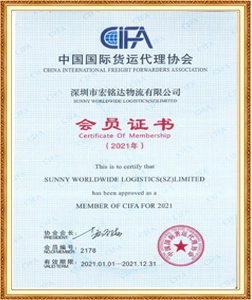
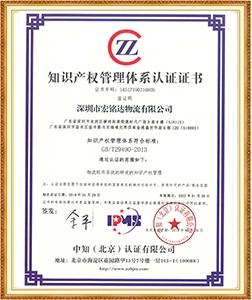
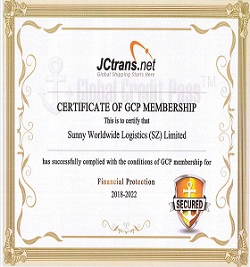
- Certifications
-
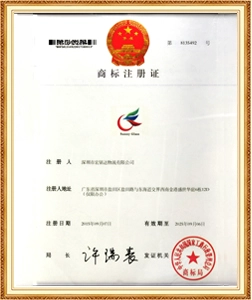
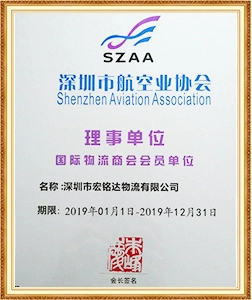
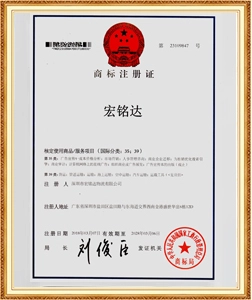
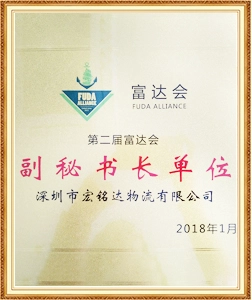
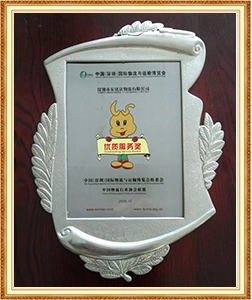
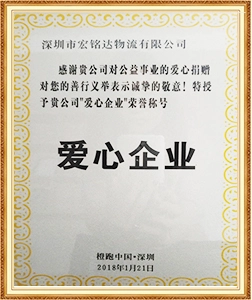
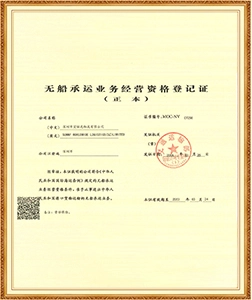
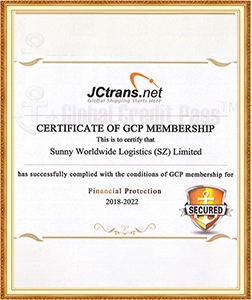
- Follow us
- Subscribe
-
Get email updates on new products
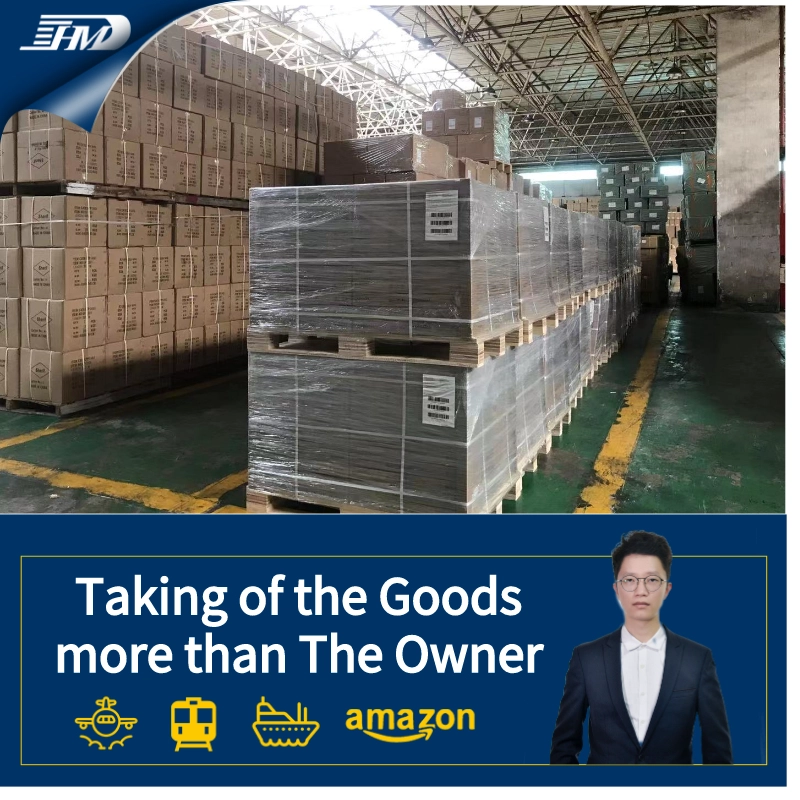
China to Poland Door to Door Shipping Postponed VAT Service
- Destination:Poland
- Departure Day:Poland
- Transit Time (Days):35 Days
- Shipment Type:All Types
- Type:Freight Forwarder Sea Cargo
China to Poland Door to Door Shipping Postponed VAT Service
The Short Answer
On the Polish lane the term you choose determines whose name sits on the ZEFIR2 declaration, and therefore who settles the duty and the 23 per cent VAT. Under DDP that party is us, and the consignee receives one landed figure. Under DDU it is your buyer, who needs a working Polish VAT position to lodge the entry at all. A buyer already registered and filing monthly can push import VAT into its own return under the Article 33a simplified procedure, which is why registered importers often prefer DDU while everyone else has no practical option but DDP.
What Each Term Commits You To
DDP means the forwarder acts as importer of record from collection to delivery. Duty, the Polish VAT on entry, the ZEFIR2 declaration and the final inland leg all sit with one party, and the buyer sees a single price.
DDU sits on the other side of that line. We carry the goods and deliver them to the agreed place, but the consignee lodges the declaration and pays the charges. DDU is no longer an Incoterms term — the 2020 edition carries the same duty-unpaid logic under the name DAP — yet the trade continues to use the older label, so quotations still name it.
Which Term Fits Your Consignment
Rather than treat the two as interchangeable prices, it is quicker to test four conditions.
DDP is normally the right call when:
- the consignee holds no Polish VAT registration and cannot lodge a ZEFIR2 declaration in its own name
- the buyer is a private customer, a start-up, or a company buying from China for the first time
- the buyer wants a single number it can put straight into a pricing model
- the commodity is a sample, a spare part or a trade-fair consignment moving on a short deadline
DDU is normally the right call when:
- the consignee is VAT-registered in Poland and files monthly returns, so import VAT can be settled and offset inside the return
- the buyer already works with its own customs agency and does not want a third party on its declaration
- the buyer holds an authorisation under the Article 33a simplified procedure and wants the cash-flow advantage for itself
- the goods are moving into a bonded or excise arrangement the buyer controls
The deciding factor is rarely the freight rate. It is whether the party paying the tax can recover it.
The Polish Requirements Behind the Term
A non-EU seller needs a tax representative in order to register
Polish VAT law allows a business established outside the European Union to appoint a tax representative, and in practice the registration is not completed without one. A company within the European Union can register on its own. This matters on a DDP quotation because the forwarder, not the buyer, has to hold the resulting position.
Import VAT can be kept away from the border under Article 33a
Article 33a of the Polish VAT Act lets an eligible importer declare import VAT in its periodic return instead of paying it at clearance. The Polish standard rate is 23 per cent, with reduced rates of 8, 5 and 0 per cent for defined categories. Eligibility for the simplified procedure turns on Polish VAT registration, monthly settlement, a clean tax record and the relevant customs authorisation. Where it applies, the tax is declared and deducted in the same return and never becomes an upfront cost, which removes the main reason a registered importer would avoid clearing goods itself.
Cargo bound for Poland is often cleared under procedure 4200
A significant share of Poland-bound freight lands at Hamburg, Bremerhaven or Rotterdam and is released to free circulation there without Polish VAT being paid at that border, moving onward under procedure 4200. The practical consequence for a DDP quotation is that the declaration may be lodged in Germany rather than in Poland, so the importer of record needs registrations in the right country, not simply the destination country. The route is legitimate and routine, but it has to be priced deliberately rather than discovered after arrival.
Invoices now have to travel through KSeF
Poland's national e-invoicing system, KSeF, became mandatory on 1 February 2026 for taxpayers whose 2025 sales exceeded 200 million zloty, and from 1 April 2026 for everyone else. Small taxpayers issuing up to 10,000 zloty gross per month may defer to 1 January 2027. A freight invoice issued to a Polish business is therefore no longer a PDF exchanged by email; it has to be structured and routed through the system, which affects how DDP quotations and their supporting charges are documented.
Packaging and electrical goods carry BDO registration
Poland registers producers in the BDO database rather than through a single national eco-organisme. A business without a Polish establishment must appoint an authorised representative to hold the registration, which is filed through the Marshal's Office for the Mazowieckie region, and separate streams apply to packaging, waste electrical and electronic equipment, and batteries. In 2026 the BDO system was upgraded to require electronic waste transfer documentation, known as KPO, from every registered producer.
EU-level duty and product rules apply here as well
The European Union's 150 euro duty exemption ended on 1 July 2026, and consignments below that value now attract a temporary 3 euro duty per category of goods expected to run until 1 July 2028. An economic operator established in the European Union has had to be named on the product or its packaging since 13 December 2024, and the carbon border adjustment mechanism entered its definitive period on 1 January 2026 for steel, aluminium, cement, fertiliser, electricity and hydrogen.
Routes into Poland
- Sea through Gdansk and Gdynia. The Baltic deep-water terminals take most containerised traffic for the Warsaw region, the Tri-City industrial belt and onward distribution into the Czech Republic and Slovakia. Reference door-to-door window: 38 to 50 days.
- Rail through Malaszewicze. This is the gauge-change border east of Warsaw where China–Europe block trains enter Poland, which is why the country is the natural rail gateway for the whole corridor. Reference door-to-door window: 18 to 26 days.
- North Sea ports with procedure 4200. Where Baltic sailings are full or the rate is unattractive, cargo is cleared at Hamburg, Bremerhaven or Rotterdam and moved into Poland under procedure 4200. Reference door-to-door window: 35 to 45 days.
- Air through Warsaw Chopin, Katowice and Gdansk. Used for launch stock, automotive line-stoppage parts and high-value electronics. Reference door-to-door window: 5 to 9 days.
Declarations in all four cases are filed electronically through the PUESC portal, which the Krajowa Administracja Skarbowa operates as the single window for customs, excise and transit.
Why Shippers Use Us on the Poland Lane
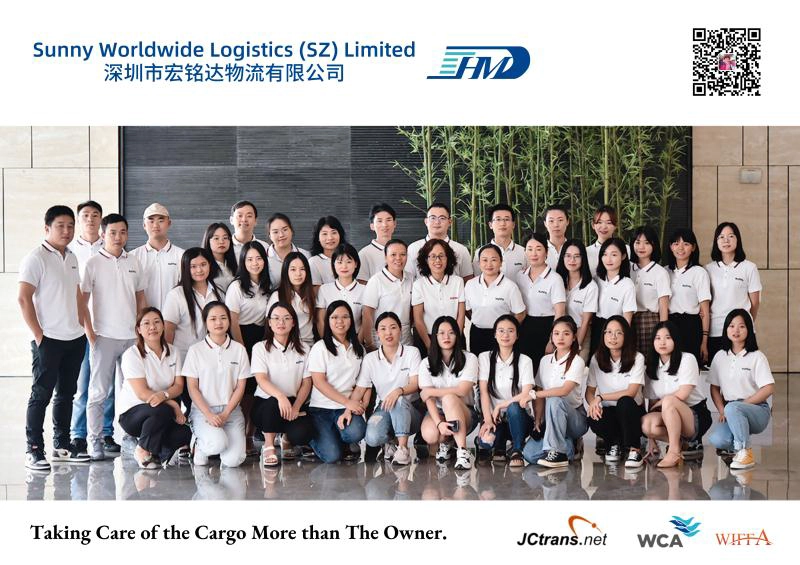
Owning the first mile changes what a door-to-door promise is worth. Sunny Worldwide Logistics (SZ) Limited runs its own trucking company at the Shenzhen sea port and operates from a Class A office of 1,800 square metres, so the leg between your supplier's door and the vessel is performed by the same company that quoted it rather than subcontracted at the last minute.
Poland rewards that continuity because the documentation stack is deep. The ZEFIR2 entry, the Article 33a election where it applies, the BDO registration and the KSeF routing are all decided from paperwork rather than inspected at the frontier. A single forwarder holding the whole chain prepares those files once and in the right order instead of re-cutting them at a Baltic or North Sea terminal.
Cargo We Move to Poland
- Machinery, automation equipment and production-line spare parts for the Silesian and Greater Poland manufacturing regions
- Automotive components and aftermarket parts, a sector where line-stoppage consignments are common
- Household appliances, consumer electronics and small electricals
- Furniture, flat-pack ranges and home textiles
- Building materials, sanitary ware, tiles and architectural hardware
- Packaging, point-of-sale display units and promotional print
- E-commerce replenishment stock and retail samples
Three of those categories add Polish registrations on top of the customs entry. Electricals bring BDO obligations for waste equipment, anything containing batteries carries its own registration stream, and household packaging is registered separately again, with an authorised representative required if the producer is not established in Poland.
What We Need Before Booking
- Commercial invoice showing unit values, currency and a six-digit tariff code for every line
- Packing list with carton counts, dimensions and gross weights
- The consignee's full Polish address, plus its Polish NIP and VAT number if it holds them
- A statement of whether the buyer intends to be the importer of record or to work on DDP
- An indication of whether the consignee can use the Article 33a simplified procedure
- Any test report, declaration or licence the product category requires in Poland
About the Company Filing Your Entry
Founded in 1998, Sunny Worldwide Logistics (SZ) Limited has spent more than two decades working as a full-service domestic and international freight forwarder out of China, built on dependable customer service and its own transport capability. Its 1,800 square metre Class A office sits beside a trucking company the firm owns at the Shenzhen sea port, which is how the first mile stays in its own hands.
|
Contact |
Detail |
|
Contact person |
Samira Chen |
|
Company |
Sunny Worldwide Logistics (SZ) Limited |
|
Address |
8/F, Block B, Rongde Times Square, Henggang Street, Longgang District, Shenzhen, China |
|
Phone and WhatsApp |
+86 13428330724 |
|
Trade Manager |
cn220161160 |
|
|
sales38@swwlogistics.com.cn |
Questions Shippers Ask About Poland
Q: Can our Polish customer clear the goods without being registered for VAT?
A: No. The ZEFIR2 declaration has to be lodged by a party holding a Polish VAT position, and a consignee without one cannot settle the import charge. In that situation DDP is the only practical arrangement.
Q: What is the Article 33a simplified procedure, and who can use it?
A: It allows an eligible importer to declare import VAT on its periodic return instead of paying at clearance. It requires Polish VAT registration, monthly settlement, a clean tax record and the relevant customs authorisation, and it makes the tax cash-neutral where a deduction is available.
Q: Why would a shipment destined for Poland be cleared in Germany?
A: Because it may have been released at Hamburg, Bremerhaven or Rotterdam under procedure 4200 and then moved onward, which is normal practice when Baltic sailings are full. It changes which country's registration the importer of record needs, so it should be priced deliberately.
Q: Do we need a Polish tax representative?
A: A company established outside the European Union generally does, and registration is not completed without one. A company within the European Union can register on its own.
Q: Has mandatory e-invoicing changed anything for importers?
A: Yes. KSeF became compulsory on 1 February 2026 for taxpayers above 200 million zloty of 2025 sales and on 1 April 2026 for the rest, with small taxpayers able to defer to 1 January 2027. Freight invoices to Polish businesses now have to be structured and routed through the system.
Q: What changed for consignments under 150 euros?
A: The EU duty exemption ended on 1 July 2026 and a temporary duty of 3 euros per category of goods now applies, expected to run until 1 July 2028. It affects sample and spare-part flows more than full container traffic.
Get a DDP or DDU Quotation for Poland
Give us the commodity, the carton count and the delivery postcode, and say whether your buyer wants to be the importer of record. We will price the same consignment both ways — one figure with Polish duty and VAT inside it, one stopping at the delivered price — so the choice can be made on the numbers rather than on the label.
Call or message Samira Chen on +86 13428330724, or email sales38@swwlogistics.com.cn with the shipment details.
Tel:+8613534256934
Wechat:13534256934
Contact Person:Samira

- Other Products