














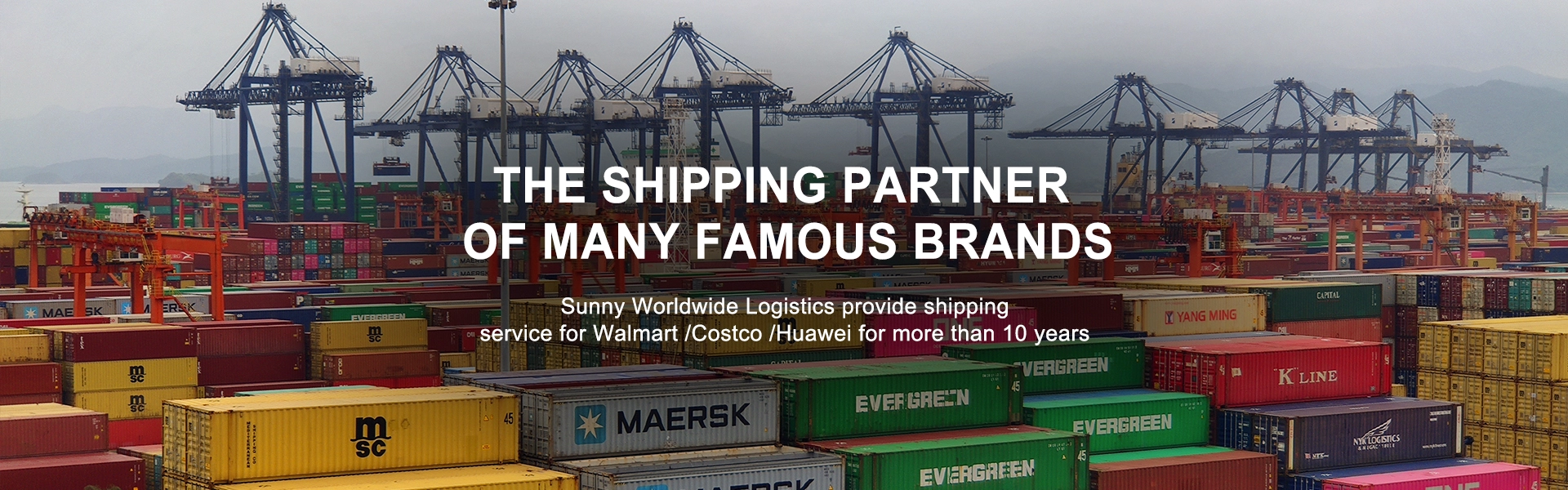

















Asian ports are blocked, shipping schedules are delayed, and U.S. line freight rates rise sharply
Sunny Worldwide LogisticsIt is a logistics company with more than 20 years of transportation experience, focusing on markets such as Europe, the United States, Canada, Australia, and Southeast Asia. It is more of a cargo owner than a cargo owner~

Recently, many major ports in Asia have experienced varying degrees of operational delays and shipping schedule disruptions. Some goods originally scheduled to be shipped in July were forced to be postponed to August. As shipping companies continue to implement capacity control, freight rates on the West-West and East-US routes have rebounded significantly.
The Shanghai Export Container Freight Index stopped falling and rebounded on July 31. The US route became the main driving force for this round of increase. Among them, the US East and US West routes both experienced weekly increases of more than 12%. The market is paying attention to whether the new round of price increase plans of shipping companies in early August can be successfully implemented.
Delays in Asian port operations intensify, shipping companies flexibly adjust shipping capacity
According to feedback from freight forwarding companies in the industry, due to recent weather factors, shipping schedules at ports such as Shanghai and Ningbo have generally been delayed by about 3 to 5 days; ports such as Singapore and Malaysia have also experienced shipping schedule adjustments of about 3 days, further dragging down ship schedules. Unstable shipping schedules have led to delayed shipments of some cargoes, objectively creating market conditions for shipping companies to push up freight rates in August.
At the same time, shipping companies continue to adjust the market space supply through suspension of sailings and cabin control. In terms of the US East Route, due to the Panama Canal traffic restrictions, the loading capacity of some large ships has been restricted, and the market's effective transport capacity has tightened, further supporting the upward trend in freight rates.
SCFI ended three consecutive declines, and the US line led the gains
According to data released by the Shanghai Shipping Exchange, SCFI closed at 3205.97 points on July 31, an increase of 143.02 points from last week, a weekly increase of 4.67%, ending the previous three consecutive weeks of decline and regaining the 3200 point mark. Among them, the freight rate in the US East rose by 12.61% to US,054/FEU, and the freight rate in the US West rose by 12.53% to US,229/FEU, becoming the main force in this round of index recovery. In contrast, European and Mediterranean routes continued their adjustment trend and performed relatively weakly.
US Line’s August price increase plan has been launched, but the implementation situation is divided
According to market news, many shipping companies plan to adjust freight rates on U.S. routes starting from August 1. Reference quotes received by some freight forwarding companies show that the U.S. line spot market increase is expected to exceed US,000 per large container. Among them, MSC's quotation for the US East Route is planned to be raised from approximately US,000 per 40-foot container to approximately US,500, and the US West Route is expected to increase by approximately US0 to approximately US,500. However, there are differences in the execution intensity of different shipping companies. Maersk’s online quotation shows that the East US is about US,740 and the West US is about US,460. The market has not yet formed a unified price increase rhythm.
Industry insiders believe that the U.S. East route is supported by tight supply and demand, and the price increase is more likely to be implemented; the U.S. West route is affected by new capacity and changes in demand, and the stability after the price increase still needs to be observed.
US line capacity changes and subsequent trends
According to Drewry capacity analysis data, there are expected to be 8 empty flights on the U.S. line in the next week, which is higher than the 7 flights in the previous week. The available capacity in the market has increased. Drewry believes that the fluctuation range of container freight rates may narrow in the coming week.
Market analysis pointed out that the recent rebound in U.S. freight rates has been driven by multiple factors: Panama Canal traffic restrictions have affected the operating efficiency of large container ships, and some ships need to adjust their loading plans; weather factors in Asian ports have led to natural shift reductions, which has alleviated market space pressure in the short term. However, with the subsequent increase in empty flights and the gradual release of new transportation capacity, whether U.S. line freight rates can continue to rise still depends on the actual cargo volume performance.
European routes performed weakly and freight rates continued to be under pressure
In contrast to the rebound in the US routes, European routes are still facing adjustment pressure in the near future. At present, the shipping company has not announced a large-scale price increase plan for European routes on August 1, and the market spot price continues to fall slightly. Freight forwarding market data shows that among the reference quotations for 40-foot containers on some European routes, the OA alliance is about 4,900-5,000 US dollars, and the PA alliance is about 4,400-4,600 US dollars.
According to Drewry capacity analysis, there are expected to be three empty flights on the Asia-Europe route in the next week, which is less than the four flights in the previous week. As shipping companies continue to manage market capacity, Drewry expects freight rates on European routes to remain relatively stable in the short term.
The game between peak season demand and supply chain risks
The current container market shows a clear differentiation pattern: the US line has rebounded in the short term due to port delays, capacity control and peak season demand; the European line is still in the price adjustment stage due to insufficient demand recovery. At the same time, continued tensions in the Middle East and increased shipping risks in the Red Sea and Persian Gulf have driven fuel costs and risk premiums to remain high.
For export companies and freight forwarders, market trends in August need to focus on three variables: whether congestion at major ports in Asia can be alleviated, changes in shipping companies' sailing suspension plans and actual capacity deployment, and whether US line price increases can be accepted and continued by the market.
In the short term, U.S. freight rates still have upward momentum, but the subsequent increase and duration still need to be observed in terms of actual booking demand and changes in new shipping capacity.