

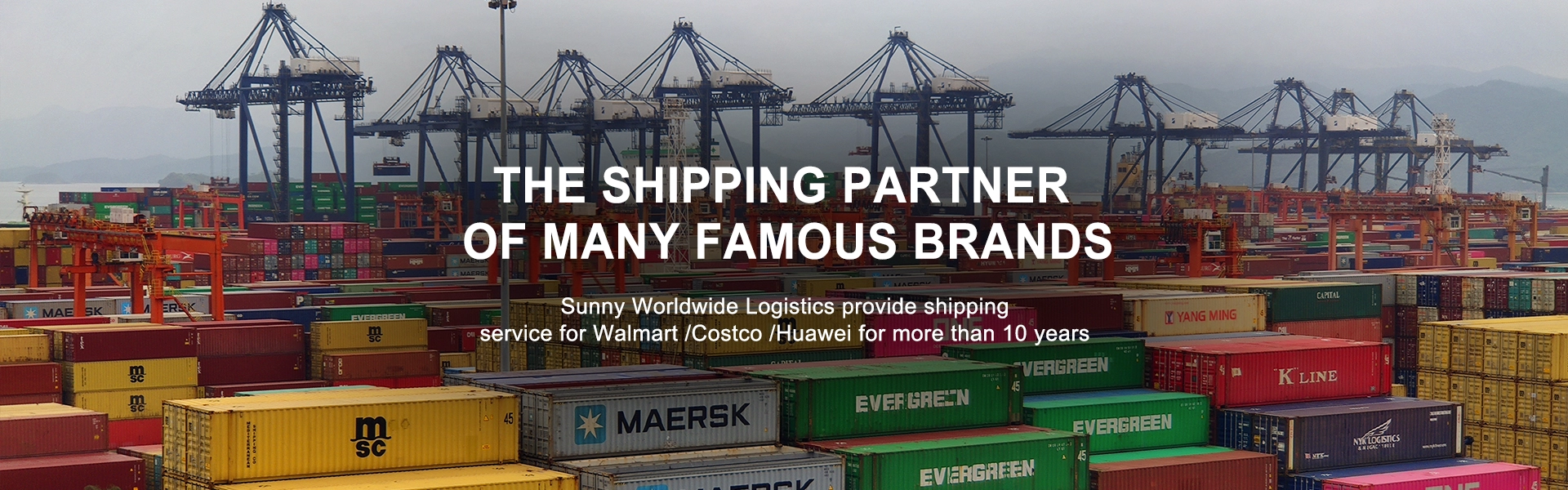

















Freight rates have risen for the fourth consecutive time, Europe-European lines have risen, and the strike at West American ports has been postponed
Sunny Worldwide Logistics It is a logistics company with more than 20 years of transportation experience, focusing on markets such as Europe, the United States, Canada, Australia, and Southeast Asia. It is more of a cargo owner than a cargo owner~

On October 30, the Shanghai export container freight index reported 3687.35 points, an increase of 6.01 points from the previous period, a weekly increase of 0.16%, and a fourth consecutive weekly increase. Although the index continued its upward trend, the increase narrowed, and the trends of major routes continued to diverge. Freight rates for the West-U.S. and East-U.S. routes fell slightly, while freight rates for European, Mediterranean and Persian Gulf routes increased, while the decline for South American routes further expanded.
The U.S. line pulls back slightly, labor negotiations in the U.S. and Spain suspend immediate risks
In terms of the US line, the freight rate from Shanghai to the basic port in the West US was reported at US$7,479/FEU, a weekly decrease of 0.56%; the freight rate from Shanghai to the basic port in the US East was reported at US$10,199/FEU, a weekly decrease of 1.82%. The decline in the Eastern United States was higher than that in the Western United States, indicating differences in supply and demand and shipping arrangements at different destination ports.
The progress of labor negotiations at US-Western ports has attracted attention. The ILWU Local 26 union, which employs about 250 port security personnel at the Port of Los Angeles/Long Beach, and the employer Pacific Maritime Association announced that they will extend the negotiation period to November 4, local time, and the risk of a strike originally scheduled for November 1 will be temporarily postponed. The Pacific Maritime Association stated that the terminal where relevant personnel work handles more than half of the total cargo volume of the two ports; if a subsequent strike occurs, the shipping schedule, storage yard and gate operations of the affected terminal may be affected.
Freight rates in Europe and Europe have rebounded, and empty flights on Asia-Europe routes have decreased.
In terms of European routes, the freight rate from Shanghai to the European basic port was reported at US$2,370/TEU, a weekly increase of 0.81%; the freight rate from Shanghai to the Mediterranean basic port was reported at US$3,350/TEU, an increase of US$95, a weekly increase of 2.92%. The increase in Mediterranean routes was higher than that in European routes, reflecting differences in regional supply and demand and call arrangements.
Drewry analysis pointed out that this week (November 2 to 8), 4 empty flights have been announced on the Asia-Europe route, down from 8 in the previous week. Given sufficient shipping capacity and weak demand, short-term freight rates are expected to be generally stable. The reduction in empty flights means an increase in available shipping capacity. If demand fails to improve simultaneously, the upside potential for freight rates may be limited.
The trends of other routes are divergent, and the decline in South America expands.
The Persian Gulf route continued to rise slightly from a high level, with the freight rate from Shanghai to the basic port of the Persian Gulf reported at US$6,533/TEU, a weekly increase of 0.52%. The decline in the South American route continued to expand. The freight rate from Shanghai to the basic port in South America was reported at 4,371 US dollars/TEU, a weekly decrease of 13.50%, which was the largest decrease among the major routes this week.
The Australia-New Zealand route continued to adjust, with the freight rate from Shanghai to the basic port of Australia and New Zealand reported at US$2,526/TEU, a weekly decrease of 0.63%. In terms of near-ocean routes, the freight rate from Shanghai to the basic port in Southeast Asia was reported at US$1,164/TEU, a weekly increase of 1.57%; the freight rate from Shanghai to Busan, South Korea was reported at US$351/TEU, a weekly decrease of 6.65%.
Operation tips
Although the current freight index continues to rise, major routes have experienced mixed increases and decreases. Freight forwarders and cargo owners should not judge specific route costs based solely on the comprehensive index. It is recommended to understand the freight rate trend in advance before shipping, check the latest shipping schedule and space availability, and check the shipping company's quotation and surcharge structure on a ticket-by-ticket basis.
For goods entering and exiting through Western US ports, it is necessary to focus on the progress of labor negotiations, terminal operation status and inland connection arrangements, reserve buffer time for potential delays, and reasonably arrange cargo transportation plans.