






























Maersk: Bookings are heating up before Golden Week, port congestion may continue to support freight rates
Sunny Worldwide Logistics It is a logistics company with more than 20 years of transportation experience, focusing on markets such as Europe, the United States, Canada, Australia, and Southeast Asia. It is more of a cargo owner than a cargo owner~

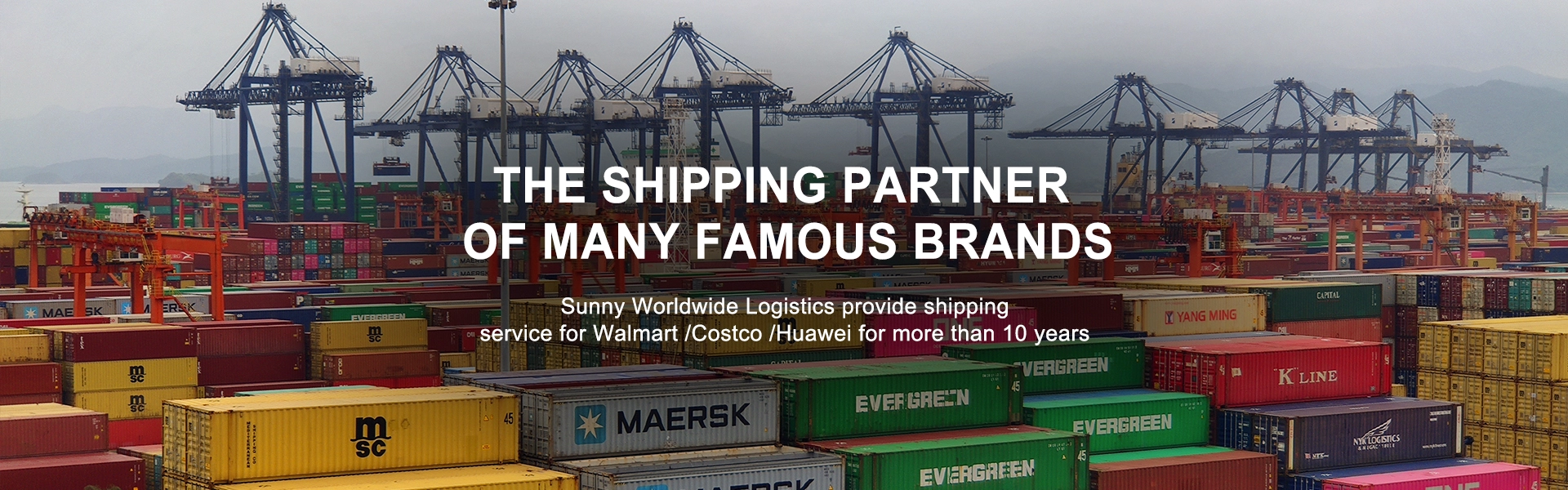
As China's National Day Golden Week approaches, the Asian container shipping market has not shown any signs of significant cooling in demand that the market had previously worried about. Maersk's Asia-Pacific market update released on September 9 shows that fourth quarter cargo volume planning, advance booking before the Golden Week, and Asian port congestion are still the main features of the current market. Haider Anjum, senior analyst at Danish Jylland Bank, believes that the above signals may continue to provide support for Maersk's performance in the next few quarters.
Maersk reminds cargo owners to arrange shipping plans in advance
Maersk pointed out in its latest market update that as China’s Golden Week and the fourth quarter peak season approach, cargo owners need to evaluate shipping arrangements in the coming months as soon as possible. For goods scheduled to arrive in the fourth quarter, some cargo volumes may be shipped before the Golden Week, including striving for a shipping date at the end of September, to increase booking and shipping schedule options.
At the same time, seasonal weather and port congestion may still affect ship operations and schedules, and have a knock-on effect. Citing Sea-Intelligence data, Maersk said that ship schedule rates at Asia's 14 busiest ports have declined, and delays may be further transmitted to subsequent voyages and trans-Pacific routes. It is worth noting that Maersk has previously announced some route adjustments during the Golden Week, including some empty flight arrangements for AE15, AE12 and AE1 services from the Far East to Europe; trans-Pacific routes will also be adjusted based on holiday demand.
Port congestion becomes a supporting factor for freight rates
According to Jyske Bank analyst Haider Anjum, the current market has not yet shown signs of significant “normalization” of container shipping demand. He believes that advance booking, port congestion, shipping schedule delays and relatively stable transportation demand have jointly led to the contraction of effective shipping capacity. Once a ship is delayed due to port congestion or weather factors, the actual capacity available for carrying cargo will decrease accordingly; this usually supports freight rates as long as demand remains stable.
In other words, the key to the current market lies not only in “availability”, but also in the actual amount of effective transport capacity. Declining port efficiency and weakening shipping schedule reliability may amplify the impact of tight shipping capacity on market prices.
Maersk has raised its performance forecast three times this year
The above judgment echoes Maersk's operating performance this year. After maintaining full-year guidance in May, Maersk raised its 2026 Underlying EBITDA forecast from US$4.5 billion to US$7 billion to US$8 billion to US$10 billion in June. In August, it was further raised to US$10.5 billion to US$12.5 billion, and its Underlying EBIT forecast was raised to US$4.5 billion to US$6.5 billion. The company expects global container market volume to grow by approximately 4% in 2026.
Judging from the latest results, Maersk's ocean shipping business loading volume increased by 4.1% year-on-year in the second quarter, and the average loading freight rate increased by 22% year-on-year. The Ocean business EBIT reached US$935 million, compared with a loss of US$192 million in the first quarter. Haider Anjum believes that if the current freight rate level can remain roughly stable in the last few months of this year, the possibility of Maersk raising its full-year performance guidance again will further increase. However, this judgment is still the opinion of analysts and is not a new guidance that Maersk has issued.
Freight forwarders need to pay attention to shipping spaces, shipping schedules and port operations
At present, advance booking before the Golden Week, Asian port congestion and shipping schedule delays are jointly affecting the market's effective shipping capacity. For freight forwarders, in addition to paying attention to freight rate changes in the future, they also need to pay more attention to the space, shipping schedules and port operations before and after the Golden Week. Especially for the cargo volume planned to be shipped in the fourth quarter, booking arrangements and alternative plans should be made in advance.