































U.S. line freight rates soared by more than 300%, but the on-time rate fell to 29.4%. Shippers purchased shipping capacity at high prices and found it difficult to exchange for stable shipping schedules.
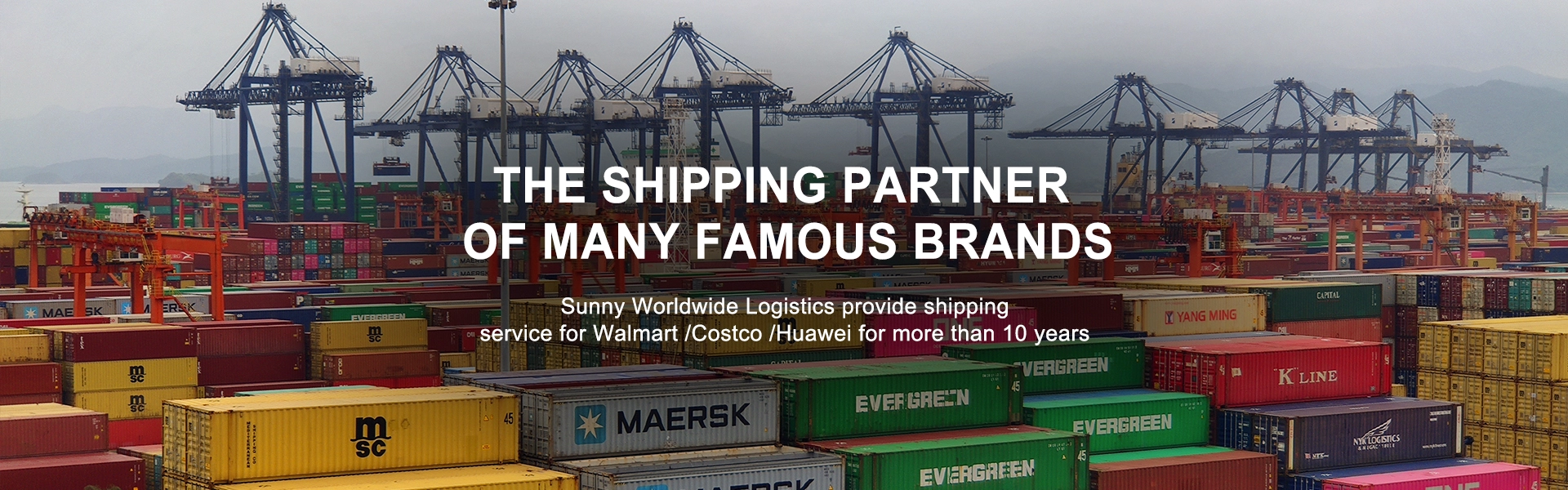
Sunny Worldwide Logistics It is a logistics company with more than 20 years of transportation experience, focusing on markets such as Europe, the United States, Canada, Australia, and Southeast Asia. It is more of a cargo owner than a cargo owner~

According to the latest industry data from Xeneta, due to the combined impact of multiple external factors, the reliability of global container liner shipping schedules has significantly deteriorated. Spot freight rates for routes related to major U.S. ports have simultaneously risen sharply. The market presents a contradictory pattern of "rising freight rates and declining services."
The global on-time rate has dropped sharply, and the performance gap among various leagues has widened.
The latest statistics show that the current average punctuality rate of global container ships is only 29.4%. The service capabilities of major shipping alliances are significantly differentiated: Gemini Cooperation ranks first in the industry with an on-time rate of 51.8%; Ocean Alliance is at 27.7%; MSC is at 26%; and Premier Alliance has an on-time rate of only 15.8%.
Since July, the global on-time rate has dropped by 3.3 percentage points as a whole, and all major alliances have experienced varying degrees of decline. Shipping delays during the peak season have become a common phenomenon in the industry.
The conflict in the Middle East continues to ferment, and U.S. freight rates rise sharply
Since the outbreak of the conflict in the Middle East on February 28, 2026, freight rates on the route from the Far East to the United States have continued to rise. Xeneta senior analyst Peter Sand said that since the beginning of July, the spot freight rate from the Far East to the US East has increased by 25% again, rising 1.6% week-on-week to US$10,910/FEU; the freight rate from the Far East to the US-West has increased by 2.5% week-on-week to US$7,496/FEU.
Based on the actual quotations of first-line freight forwarders in the first half of September, the market transaction differentiation is obvious: the spot market freight rate for 40-foot containers in the West US is about 7,500 to 7,700 US dollars, and the price for contract customers generally exceeds 6,000 US dollars; the quotation in the East US spot market is close to 11,000 US dollars/FEU, and the transaction price for contract customers is mostly maintained at more than 9,000 US dollars. Compared with the initial period when the conflict broke out, the cumulative freight rate from the Far East to the United States has increased by 289%, the U.S. East route has increased by as much as 305%, and the freight rate from Northern Europe to the United States has also increased by 95%.
Freight rates on European and continental routes continue to weaken and market polarization intensifies
In sharp contrast to the U.S. route, which continues to rise due to favorable geographical conditions, the European route shows a typical "not prosperous in peak season" trend.
According to SCFI data, the European basic port freight rate was reported at US$2,643/TEU on September 4, and the Mediterranean basic port freight rate was reported at US$3,442/TEU, down 2.7% and 3.2% respectively from the previous month. Combining the Drewry Index and first-line freight forwarding quotations, the mainstream transaction price of 40-foot containers at basic ports in Northern Europe in the first half of September remained in the range of US$3,600 to US$4,200. Although the price of the Mediterranean route is slightly higher, it is also in a volatile downward channel.
The core of the weak market lies in the imbalance of supply and demand. The recovery of terminal consumption in Europe is sluggish. Most importers have completed pre-holiday stocking from June to July. The volume of mainstream exports such as retail and home furnishings has dropped significantly. Only electromechanical and new energy goods have maintained rigid volume. At the same time, the European and continental routes continue to invest in ultra-large container ships, with sufficient space supply, and shipping companies’ cabin control actions are relatively limited. Even if price increase notices are issued many times, they are difficult to implement in the context of weak cargo volume. The bargaining initiative in the spot market is more in the hands of cargo owners.
It is worth noting that compared with the initial stage of the conflict in the Middle East in February, the current freight rates on the European routes have still increased significantly. The cumulative increases on the Nordic and Mediterranean routes have reached 111% and 61% respectively. However, the continued typhoon weather in Asia has severely affected route operation efficiency. The on-time rate of Asia-Europe routes plummeted from 47% in mid-June to 3% at the end of July, and the on-time rate of North American routes also dropped from 38% to 19%. The industry highlights the contradictory pattern of "freight price differentiation and service decline", and low-price European routes cannot avoid the risk of shipping delays.
Institutions have different views on the market outlook, and the number of blank cruises has begun to increase.
Regarding the subsequent market trends, industry organizations’ judgments are not uniform. Peter Sand reminded that as the domestic Golden Week approaches in early October, the release of market demand may further push up freight rates. Drewry gave a cautious judgment: in the week of September 6, the US line had announced 6 blank voyages, twice the size of the previous week. On the premise that demand remains resilient and shipping companies proactively regulate shipping capacity, institutions predict that freight prices will most likely remain volatile and stable next week and will not continue to rise rapidly in the short term.
Recently, multiple typhoons in Asia have disrupted the efficiency of domestic port operations. The waiting time of ships has increased, and the passage of the Panama Canal has been restricted. The space on main routes has been tight, and the fluctuations in shipping schedules have been further amplified. Many shipping companies have issued announcements in advance about port hopping and sailing suspension adjustments before and after the Golden Week.
Industry advice
The current market is showing an obvious polarization pattern: the freight rates on the US route continue to rise but the reliability of shipping schedules has deteriorated, while the freight rates on the European and continental routes are under pressure and are also plagued by unstable shipping schedules. Multiple risks such as geopolitical conflicts, extreme weather, and transportation capacity regulation are superimposed, making it difficult for the market to quickly return to stability in the short term.
It is recommended that companies should not only use freight rate as the only criterion for selecting cabins when shipping, but should focus on shipping schedule data; reserve sufficient logistics buffer time for shipments, and closely follow up on blank voyages and port jump notices; continue to pay attention to the situation in the Middle East, typhoons, and canal traffic dynamics, and prepare alternative transportation plans in advance to reduce chain losses caused by delays and dumping of containers.